

Astigmatism, commonly known as cylindrical eye disorder, is a refractive error that causes blurry or distorted vision at all distances. This condition occurs when the cornea or lens of the eye has an irregular shape, preventing light from focusing correctly on the retina.
In a normal eye, the cornea has a perfectly round shape like a sphere. However, in people with astigmatism, the cornea tends to be more oval, similar to a rugby ball. As a result, light rays entering the eye are focused on multiple points on the retina, causing blurred or double vision.
Astigmatism can occur in anyone — children or adults — and is often found together with nearsightedness (myopia) or farsightedness (hypermetropia).
Main Causes of Astigmatism
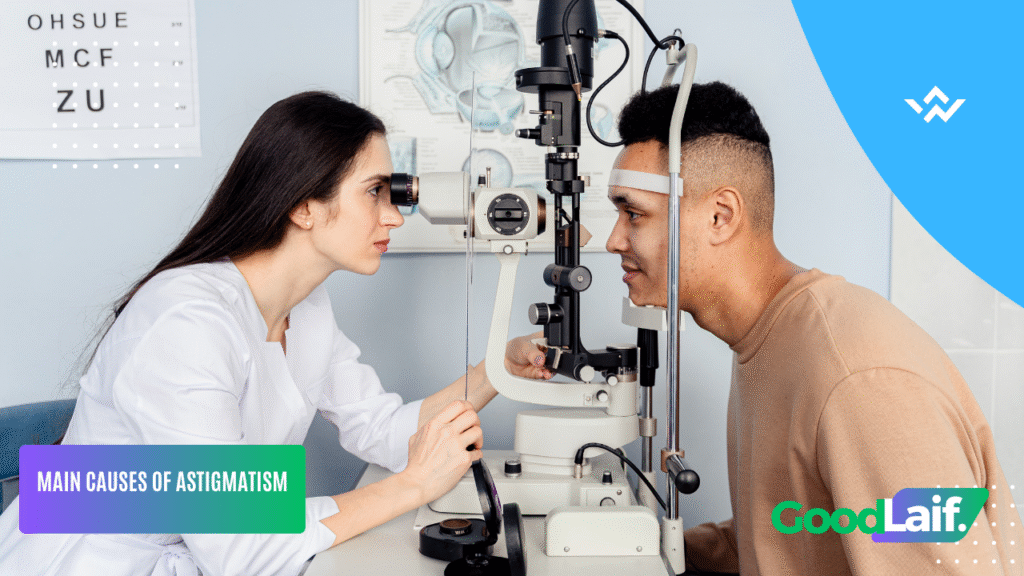
The primary cause of astigmatism is an asymmetrical shape of the cornea or lens. However, several other factors may also increase the risk of developing this condition.
Some cases are hereditary, meaning astigmatism can run in families. Eye injuries, previous eye surgeries, or medical conditions such as keratoconus — a thinning of the cornea that causes it to become cone-shaped — can also contribute.
Although poor visual habits such as reading in dim light or spending long hours on screens do not directly cause astigmatism, they can make the symptoms worse over time.
Common Signs and Symptoms
The symptoms of astigmatism may vary depending on the severity. Some common signs include:
- Blurred or distorted vision at all distances
- Difficulty focusing on straight lines or reading small text
- Eyestrain or discomfort after long periods of reading or screen use
- Headaches, especially after working in front of a computer
- Frequently squinting to see more clearly
If you experience one or more of these symptoms, it is best to consult an eye specialist for a comprehensive examination.
Treatment Options

Astigmatism cannot heal on its own, but there are several effective ways to correct it and restore clear vision.
The most common and simple method is to use cylindrical eyeglasses, which contain special lenses that compensate for the uneven curvature of the cornea.
Alternatively, toric contact lenses can be used by those who prefer not to wear glasses. For more severe cases, refractive surgery such as LASIK or PRK can permanently reshape the cornea to allow light to focus properly.
Maintaining overall eye health is also essential. Take regular breaks from screens, get enough sleep, and consume foods rich in vitamin A to support healthy vision.
Prevention Tips
While genetically inherited astigmatism cannot be completely prevented, there are habits that can help reduce the risk or prevent it from worsening, such as:
- Reading or working under sufficient lighting
- Resting your eyes every 20 minutes when using digital devices
- Avoid rubbing your eyes excessively
- Scheduling regular eye checkups at least once a year
These simple habits can help keep your cornea healthy and maintain stable vision quality.
Read Also : Causes of Eye Twitching and How to Overcome It
Conclusion
Astigmatism is a common eye condition that causes blurred vision due to an irregularly shaped cornea or lens. The light entering the eye fails to focus properly on the retina, resulting in unclear vision.
Although it cannot be cured completely, astigmatism can be managed with cylindrical glasses, toric contact lenses, or refractive surgery such as LASIK. Maintaining healthy eye habits and undergoing regular eye exams are key to keeping your vision clear and comfortable.
With proper treatment and eye care, individuals with astigmatism can continue to enjoy good vision and maintain their quality of life.








+ There are no comments
Add yours