


Have you ever looked in the mirror and felt that something about your face seems slightly off? Perhaps your chin appears slightly tilted, or one side of your jaw looks more prominent than the other. At first, it may seem minor. However, over time, you might begin to wonder whether it is completely normal. An asymmetrical jaw often raises curiosity and, in some cases, concern.
In reality, almost everyone has some degree of facial asymmetry. In fact, perfect symmetry is extremely rare. Nevertheless, when the difference between the right and left sides of the jaw becomes noticeable or starts affecting daily function, it may require closer attention.
What Is an Asymmetrical Jaw?
Simply put, an asymmetrical jaw refers to a condition in which the lower jaw (mandible) is not evenly aligned. As a result, the chin may shift to one side, the bite may feel uneven, or the face may appear slightly slanted.
In mild cases, jaw asymmetry is purely cosmetic and does not cause any physical discomfort. On the other hand, more significant imbalances can affect chewing, speaking, and even breathing. In addition, some individuals may experience discomfort or pain around the jaw joint.
Common Causes of an Asymmetrical Jaw
There are several factors that can contribute to jaw asymmetry. For example:
1. Genetic Factors
First of all, facial bone structure is largely influenced by genetics. Therefore, if one or both parents have noticeable jaw asymmetry, the trait may be inherited.
2. Daily Habits
Moreover, consistent habits such as chewing on one side, resting your chin on your hand, or maintaining poor posture for long periods can gradually influence jaw alignment over time.
3. Injury or Trauma
In some cases, accidents or facial injuries—especially during childhood or adolescence—can interfere with proper jaw development. Consequently, the jaw may grow unevenly.
4. Temporomandibular Joint (TMJ) Disorders
Additionally, problems with the temporomandibular joint (TMJ) can cause the jaw to shift or function improperly. TMJ disorders often come with symptoms like clicking sounds, pain, or difficulty opening the mouth.
5. Uneven Bone Growth
Finally, during growth spurts, one side of the jaw may develop more quickly than the other. As a result, a visible imbalance can occur.
Effects of Jaw Asymmetry
Beyond aesthetic concerns, an asymmetrical jaw can also lead to functional issues. For instance, an uneven bite (malocclusion) may cause difficulty chewing or excessive pressure on certain teeth. Over time, this can lead to uneven tooth wear.
Furthermore, some people experience headaches, neck pain, or muscle tension due to jaw misalignment. If left untreated, chronic TMJ problems may gradually develop, making the condition more uncomfortable.
How to Fix an Asymmetrical Jaw

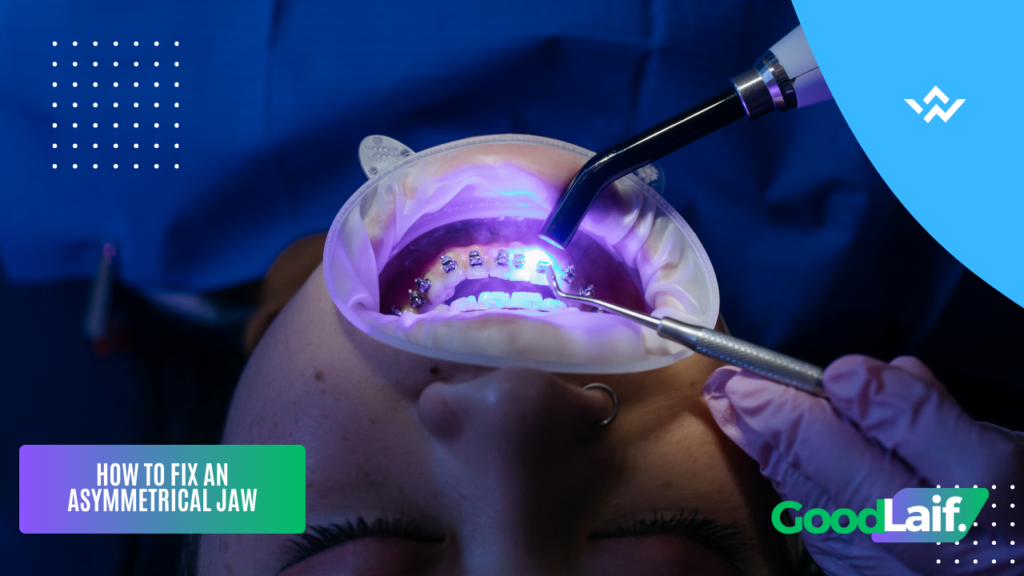
Fortunately, treatment options are available. However, the appropriate solution depends on the severity and underlying cause.
For mild cases, orthodontic treatment such as braces or clear aligners can help correct bite alignment and improve facial balance. Meanwhile, if a TMJ disorder is involved, physical therapy, stress management, or wearing a custom mouth guard may significantly reduce symptoms.
In more severe situations involving skeletal imbalance, orthognathic (corrective jaw) surgery may be recommended. Although surgery sounds intimidating, it is typically performed after a thorough evaluation by dental or medical specialists to ensure the best outcome.
At the same time, avoiding habits that worsen asymmetry—such as chewing on one side only—can help prevent further imbalance.
Read Also : How to Straighten Teeth Without Braces: Is It Really Possible?
Conclusion
Overall, an asymmetrical jaw is quite common and not always a serious medical concern. Nevertheless, if it causes discomfort, functional problems, or significant self-consciousness, seeking professional advice is highly recommended.
Ultimately, early evaluation can help determine the cause and guide the right treatment plan. With proper care and consistent management, both facial harmony and jaw function can be significantly improved.