


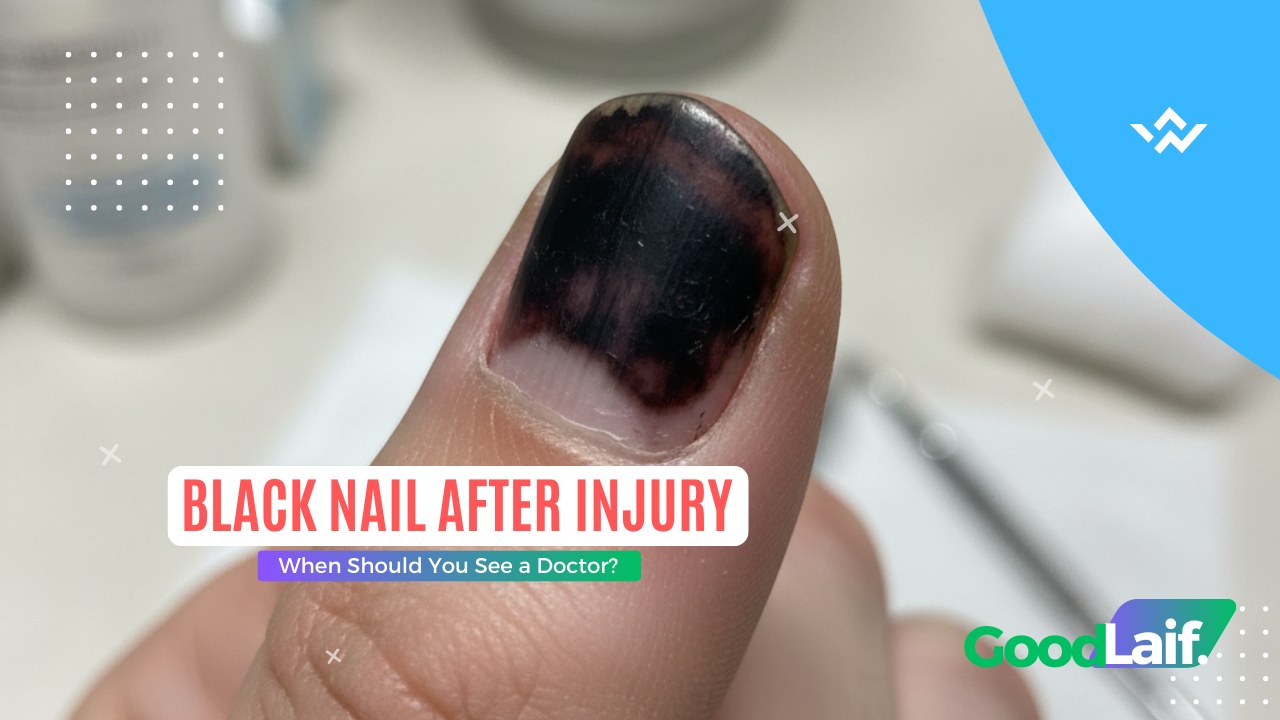
A black nail after an injury is a common condition that can affect both fingernails and toenails. It usually occurs after the nail is hit by a hard object, crushed, or exposed to strong pressure, such as accidentally closing a door on a finger or wearing shoes that are too tight. Although often considered minor, this condition can cause significant discomfort and may lead to complications if not properly treated.
Causes of Black Nail After Injury
A black nail is most commonly caused by a subungual hematoma, which is a collection of blood under the nail plate resulting from ruptured small blood vessels due to trauma. The trapped blood causes the nail to change color, ranging from dark red and purple to black. The stronger the impact, the larger the amount of blood that accumulates under the nail. Several factors can increase the risk of developing a black nail, including:
- Intense physical activity or contact sports
- Wearing tight or ill-fitting shoes
- Workplace injuries
- Walking barefoot in high-risk areas
Associated Symptoms
In addition to discoloration, a black nail is often accompanied by:
- Throbbing pain
- A feeling of pressure under the nail
- Mild swelling of the affected finger or toe
- Sensitivity to touch
- In some cases, the nail may eventually fall off
Pain is usually most intense within the first 24-48 hours after the injury.
Initial Home Care
For mild injuries, the following measures may help:
- Apply cold compresses to reduce swelling.
- Elevate the injured finger or toe above heart level to decrease blood flow to the area.
- Avoid excessive pressure on the affected nail.
- Use pain relievers if necessary, according to recommended dosage.
It is important not to attempt to puncture the nail yourself, as this can increase the risk of infection.
When Should You See a Doctor?
Although most cases heal on their own, medical attention is necessary if:
- Severe and persistent pain
If the pain continues to worsen or does not improve after several hours, it may indicate excessive pressure under the nail. - Extensive discoloration
If more than 50% of the nail surface turns black, medical evaluation is recommended. - The nail is partially or completely detached
This increases the risk of infection and requires proper medical care. - Signs of infection appear
Such as pus, excessive redness, significant swelling, or fever. - Underlying medical conditions
People with diabetes or bleeding disorders should seek medical care promptly. - Severe trauma
Especially if a fracture of the finger or toe is suspected.
A doctor may perform procedures such as draining the blood to relieve pressure, ordering X-rays, or prescribing medication as needed.
Healing Process
The black discoloration will gradually move forward as the nail grows. This process may take:
- Fingernails: approximately 4-6 months
- Toenails: approximately 9-12 months
During recovery, keep the nail clean and avoid repeated trauma to the area.
Prevention
To reduce the risk of nail injuries:
- Wear properly fitted shoes
- Use protective gear during sports
- Be cautious when handling heavy objects
- Trim nails regularly but avoid cutting them too short
Conclusion
A black nail after an injury is usually not dangerous and often heals on its own. However, it should not be ignored if it is accompanied by severe pain, extensive discoloration, signs of infection, or serious trauma. Seeking medical attention at the right time can prevent complications and ensure proper treatment.
READ ALSO ARTICLE: Lines On Nails Is Dangerous?