


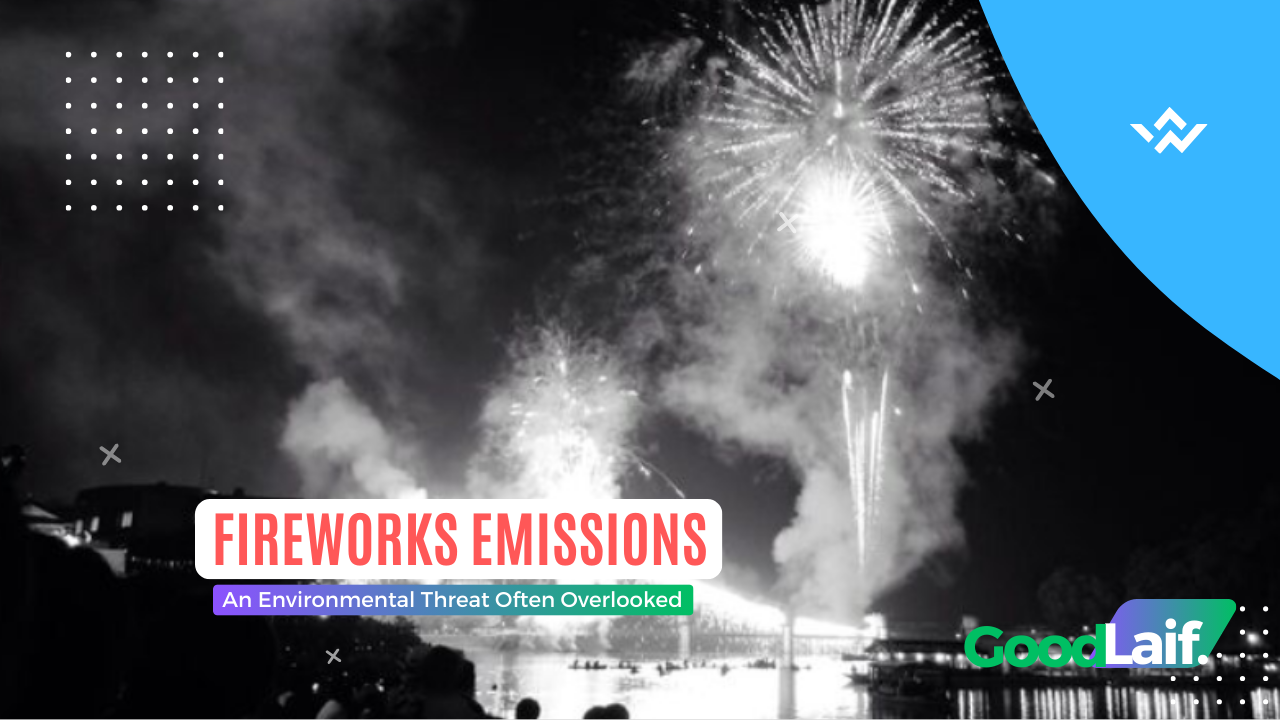
Air pollution is commonly associated with emissions from motor vehicles and industrial activities. However, there are other sources of air pollution that often escape public attention, namely the use of fireworks and the organization of large-scale entertainment events or performances. These activities are frequently perceived as integral to celebrations and public entertainment, yet they have the potential to cause fireworks emissions that adversely affects both human health and the environment, especially when conducted on a massive and repeated scale.
Definition of Air Pollution
Air pollution refers to a condition in which the air is contaminated by harmful substances at certain concentrations, leading to a decline in air quality and posing risks to living organisms. These pollutants may take the form of fine particulate matter or toxic gases produced by the combustion of various materials. In the context of fireworks and entertainment performances, fireworks emissions generally arises from the burning of chemical substances, fuels, and the use of supporting equipment for events.
Air Pollution Caused by Fireworks
Fireworks release a variety of pollutants, including fine particulate matter (PM2.5 and PM10), sulfur dioxide, nitrogen dioxide, and residues of heavy metals used to create colors and visual effects. These particles can remain suspended in the air for several hours to several days, depending on weather conditions and air circulation. A significant increase in pollutant levels is often observed after major celebrations, such as New Year’s Eve or certain religious festivities.
Air Pollution from Stages and Entertainment Performances
Large-scale stages and entertainment performances also contribute to air pollution. The use of fossil-fuel-powered generators, smoke machines, pyrotechnic effects, and increased audience mobility leads to higher emissions of exhaust gases and particulate matter. When such activities take place over extended periods or in densely populated open spaces, the air quality around the event location can deteriorate considerably.
Impacts on Public Health
Exposure to air pollution from fireworks and entertainment performances can cause various health problems. Inhaled fine particles may penetrate the respiratory tract and lungs, resulting in irritation, coughing, shortness of breath, and the worsening of asthma and other respiratory conditions. Vulnerable groups, such as children, the elderly, and individuals with chronic illnesses, face a higher risk of experiencing the negative effects of this type of air pollution.
Environmental Impacts
In addition to affecting human health, air pollution from these activities also has environmental consequences. Chemical residues from fireworks can settle on soil and in water bodies, potentially damaging ecosystems. Emissions from fuel combustion and event-support equipment further contribute to local air pollution and the accumulation of greenhouse gases.
Control and Prevention Measures
Controlling air pollution caused by fireworks and entertainment performances requires collective awareness and action. Governments can regulate the use of fireworks by limiting their duration, locations, and the types of materials used. Event organizers are encouraged to adopt more environmentally friendly technologies, such as digital visual effects or low-emission equipment. The public also plays an important role by supporting more sustainable forms of celebration and entertainment.
Conclusion
Fireworks emissions resulting from fireworks and entertainment performances is an environmental issue that is often overlooked due to its temporary nature and association with celebrations. Nevertheless, its impacts on public health and the environment should not be underestimated. Through wiser management and the adoption of environmentally friendly alternatives, celebratory and entertainment activities can continue without compromising air quality and public health.
READ ALSO ARTICLE: Environmental Cleanliness as a Foundation for Reducing Disease Risk