



Neck stiff after sitting in front of a laptop for 8 hours? Back feels sore after lifting heavy objects? Many people immediately reach for painkillers, even though there is a simple method often used to ease discomfort: hot compress therapy.
Although it looks simple, a warm compress can help relax tight muscles and make the body feel more comfortable. However, it should not be used carelessly. Improper use may worsen certain conditions.
When used correctly, a warm compress can be a practical way to reduce muscle soreness, cramps, and mild pain without relying on medication.
What Is a Hot Compress?
A hot compress is a simple therapy method that uses warm temperature to relieve pain and muscle tension in specific areas of the body.
Heat from a compress helps blood vessels widen. Blood flow improves, muscles relax, and pain gradually decreases.
Hot compresses can be made using a warm towel, a bottle filled with warm water, or a heating pad commonly sold in stores.
Benefits of Hot Compress Therapy
1. Reduces Muscle Pain After Activity
After exercise or heavy physical activity, muscles often feel sore and tight.
A warm ot compress helps improve blood circulation so muscles recover faster and feel more relaxed.
2. Relieves Joint Stiffness
Stiff joints, especially after waking up or sitting too long, often feel better after applying a hot compress.
This is why heat therapy is commonly used to reduce joint stiffness.
3. Eases Muscle Cramps
When a muscle cramps, it becomes tightly contracted and painful.
Warm temperature helps relax the muscle, reducing pain and tension.
4. Hot Compress for Menstrual Pain
Menstrual cramps can make daily activities more difficult.
Applying a warm compress on the lower abdomen can help reduce discomfort.
Some studies suggest that heat therapy may reduce menstrual pain. In some cases, its effect can be similar to low-dose pain relief medication.
5. Bonus: Helps the Body Relax
Besides reducing pain, warmth from a hot compress can also help the body feel calmer and more relaxed after a long day.
How to Use a Hot Compress Properly
To get the best results, follow these steps:
1. Use Warm Water, Not Hot Water
Water that is too hot can cause skin irritation or mild burns.
Make sure the temperature feels warm and comfortable on the skin.
2. Wrap It with a Cloth
If using a bottle or heating pad, always wrap it with a thin cloth before placing it on the skin.
3. Apply for 15–20 Minutes
A hot compress is usually applied for 15–20 minutes per session.
It can be repeated several times a day if needed.
4. Watch Skin Reaction
Stop immediately if the skin becomes too red, feels burning, or uncomfortable.
5. Be Careful with Certain Health Conditions
If you have diabetes, nerve disorders, or reduced skin sensitivity, consult a doctor before using heat therapy.
When to Use a Hot Compress
Hot compress therapy is suitable for:
- Muscle tension
- Post-activity soreness
- Joint stiffness
- Mild back pain
- Muscle cramps
- Menstrual pain
In these cases, heat helps improve blood flow and relax body tissues.
When NOT to Use a Hot Compress

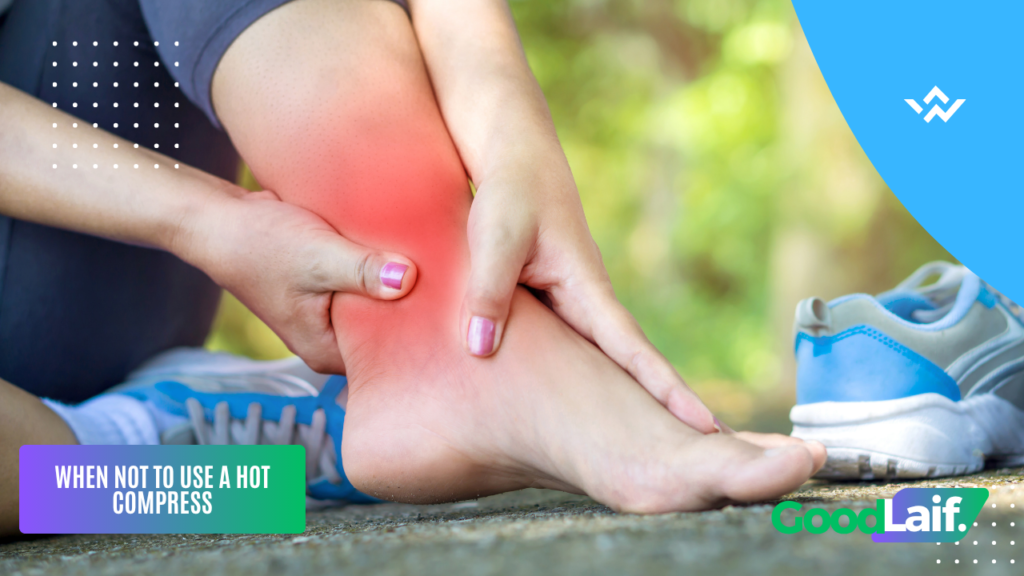
Avoid using a hot compress if you have:
- Injuries within the first 48 hours (sprains, bumps, or fresh trauma)
- Swelling in the affected area
- Open wounds
- Skin infections
- Bleeding areas
Simple rule:
HEAT = TENSION & STIFFNESS
ICE = SWELLING & FRESH INJURY
If swelling is still present, cold compress is usually a better option.
Read Also : Muscle Pain After Exercise: Causes and How to Overcome It
Conclusion
A hot compress is a simple and effective way to relieve muscle pain, stiffness, cramps, and mild discomfort without immediately using medication.
However, proper usage is important. Heat therapy is best for tight and stiff muscles, while cold therapy is better for fresh injuries with swelling.
Start by checking your condition first—whether it feels stiff or swollen—so you can choose the right treatment.
This article is for informational purposes only and is not a substitute for professional medical advice. If pain persists or worsens, consult a healthcare provider immediately.