


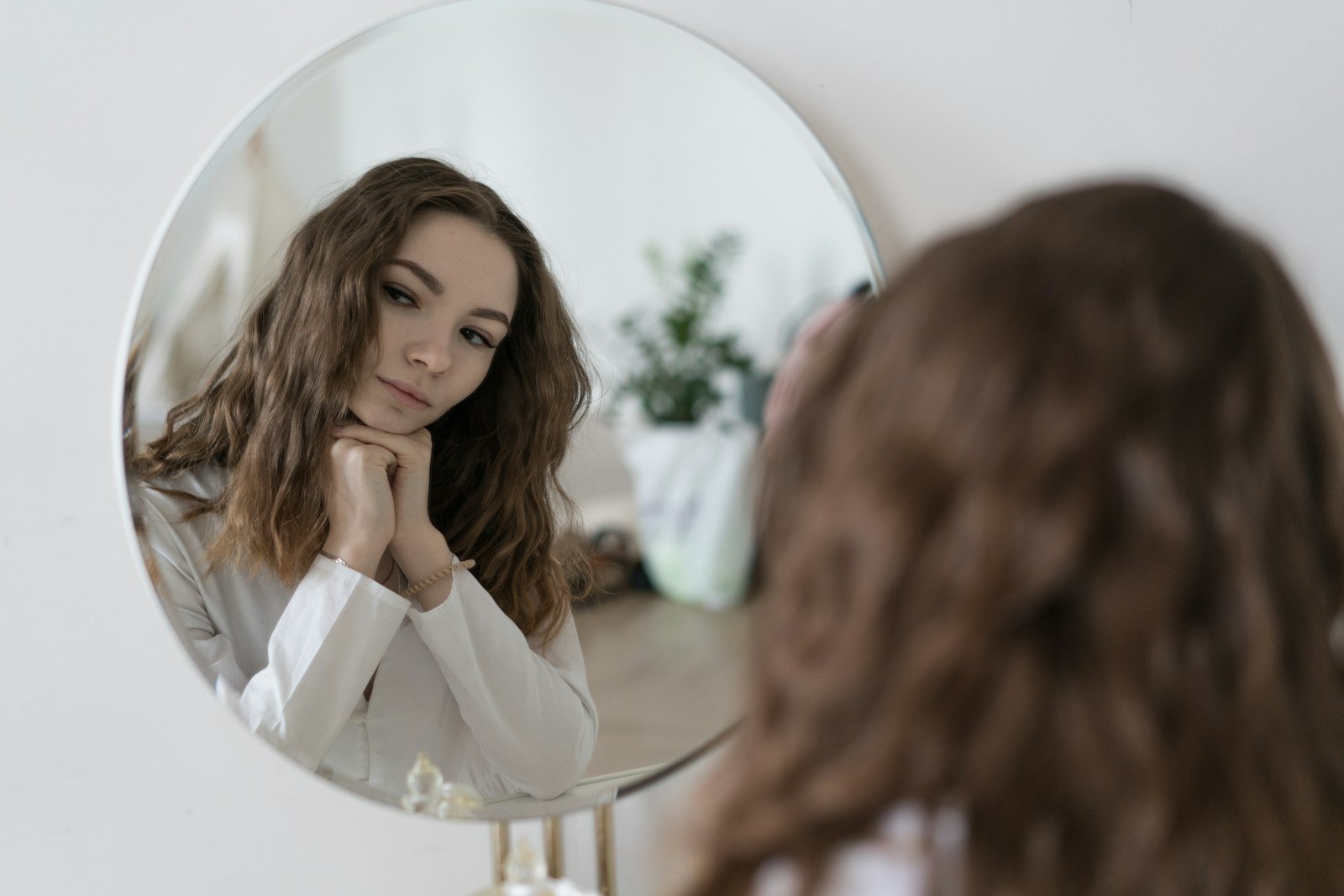
Perimenopause hair thinning often shows up first as a wider part, not as bald patches. The American Academy of Dermatology (AAD) says female pattern hair loss is the most common cause of hair loss in women, and that for most women it begins in midlife, in their 40s, 50s or 60s. So if your ponytail feels thinner or your scalp shows more under bright light, you are far from alone.
Below, you will find what experts say about why hair changes around menopause, which other causes are worth ruling out, and when a dermatologist visit makes sense.
This article is for general education and is not medical advice. Please read our Medical Disclaimer and talk to your own clinician about your health.
What Perimenopause Hair Thinning Looks Like
Many women expect clumps of hair in the shower drain. The pattern is usually quieter than that. According to the AAD, “your part often gets wider,” and hair near the temples may recede. Without treatment, the AAD adds, female pattern hair loss “can progress from a widening part to overall thinning.” It also notes that not every woman who has it will develop overall thinning.
Daily shedding is a separate matter. MedlinePlus, from the National Library of Medicine, says you lose up to 100 hairs from your scalp every day, and that this is normal. Harvard Health uses a similar yardstick: losing fewer than 100 hairs in a day is considered normal.
So a few hairs on your brush do not signal a problem. A change you can see in your part, your ponytail or your overall volume is worth noticing.
Why Hair Changes Around Menopause
The AAD calls female pattern hair loss hereditary. It also says that “because FPHL is more common after menopause, hormones may also play a role.” That wording is careful, and it is worth keeping. Hormone shifts are a likely contributor, but genes matter too, and the AAD does not claim a single cause.
Harvard Health describes a second pattern called telogen effluvium. This is a form of increased shedding that can follow a trigger. The triggers Harvard lists include abrupt hormonal changes, such as those linked with childbirth and menopause, along with iron deficiency and thyroid problems. Harvard also states that no treatment for active telogen effluvium has been proven effective, so finding and addressing the trigger is the focus.
In short, two different things can look alike from the mirror: slow pattern thinning and a burst of extra shedding. A dermatologist can tell them apart.
Other Causes Worth Ruling Out
Perimenopause is not always the whole story. MedlinePlus lists several other causes of hair loss, including thyroid problems, diabetes and lupus, certain medicines, stress, a low-protein diet, family history and poor nutrition. Harvard Health says doctors may order blood tests to check for conditions such as thyroid abnormalities that could be contributing.
That is useful, because some of these causes are fixable. Consider asking your doctor about:
- Thyroid function. Both an underactive and an overactive thyroid appear on Harvard’s list of triggers.
- Iron status. Harvard names iron deficiency as a trigger. Our guide to iron rich foods for women over 50 explains why more is not always better, so please test before you supplement.
- Medicines you take. MedlinePlus notes that some medicines can cause hair loss. Never stop a prescription on your own.
- Diet and stress. MedlinePlus lists a low-protein diet, poor nutrition and stress among the causes.
Habits That Support Your Hair
No habit replaces a diagnosis. Still, a few steps are low-risk and support your general health while you find out what is going on.
1. Eat enough protein
MedlinePlus names a low-protein diet as one possible cause of hair loss. Many women over 40 eat less protein than they think. Our article on protein for women over 40 shows how to check your own intake.
2. Do not guess with supplements
It is tempting to buy a “hair vitamin” and hope. The sources above point to testing first, because the cause may be thyroid, iron or something else entirely. A supplement that does not match your cause will not fix it.
3. Take stress seriously
MedlinePlus lists stress among the factors linked to hair loss. Sleep, movement and downtime all help. If night sweats are wrecking your rest, read our piece on menopause sleep problems.
4. Be patient and keep notes
Take a photo of your part in the same light once a month. Pictures show trends that a daily glance misses, and they give your dermatologist something concrete to review.
For a broader look at what can and cannot regrow, see our explainer on whether hair loss can grow back.
When to See a Dermatologist
The AAD advises making an appointment with a dermatologist if you think you have female pattern hair loss. It also says treatment delivers the best results when started at the first sign of hair loss. Waiting does not help here.
Book a visit sooner if you notice any of these:
- A part that keeps widening over a few months.
- Sudden, heavy shedding rather than gradual change.
- Hair loss together with fatigue, weight change or temperature sensitivity, which may point to a thyroid issue.
- Patchy loss, redness, scaling or pain on the scalp.
The AAD lists minoxidil (2% or 5%), spironolactone, finasteride, flutamide and dutasteride as treatments for female pattern hair loss. Some are prescription medicines with their own risks, so these are conversations to have with a dermatologist, not products to start on your own. Dosing and suitability depend on your health history.
FAQ: Perimenopause Hair Thinning
Does perimenopause cause hair thinning?
It can contribute. The AAD says female pattern hair loss is more common after menopause, so hormones may play a role, and most women notice it in midlife. Genetics also matter. Other causes, such as thyroid problems or iron deficiency, can look similar, so a check-up helps.
How can I tell hair thinning from normal shedding?
Normal shedding is up to about 100 hairs a day, according to MedlinePlus and Harvard Health. Thinning shows up as a wider part, less volume or a smaller ponytail. If you can see a lasting change in how your scalp looks, ask a dermatologist to take a look.
Which tests are worth asking about?
Harvard Health says doctors may order blood tests to check for conditions such as thyroid abnormalities that could be contributing to hair loss. Harvard also lists iron deficiency as a possible trigger. Your clinician will decide which tests fit your symptoms and history.
Your Next Step
This week, take one clear photo of your part and write down any other changes, such as fatigue, new medicines or heavier stress. Bring both to your doctor or dermatologist. If you would like steady, practical support through midlife, you can Join the GoodLaif Community and get our set of 50 diet motivation graphics as a thank-you.