



In the medical world, there is an interesting phenomenon that has long been the subject of research and debate, namely the placebo effect. This effect describes a condition in which a person experiences an improvement in health after receiving a fake treatment that actually contains no active substances. Situations like this raise an important question: can someone truly be healed solely by their own mind? This article will discuss the concept of the placebo effect scientifically, its mechanisms, and its implications in modern medical practice.
Definition of the Placebo Effect
Placebo comes from the Latin word placebo, which means “I will please.” In a medical context, a placebo refers to a substance or procedure that has no therapeutic effect pharmacologically, such as sugar pills, sterile water injections, or sham procedures. This effect occurs when patients feel an improvement in their symptoms after receiving a placebo because they believe they are getting an effective treatment.
This effect is not merely an illusion. Many studies show that the changes that occur in the patient’s body are real and can be measured clinically, such as reduced pain, lower blood pressure, or improved sleep quality.
Mechanism of the Placebo Effect

This effect works through a complex relationship between the mind and the body. When a person believes that they are receiving effective treatment, the brain triggers a series of biological reactions that affect the nervous system, hormones, and the immune system.
Some of the main effects include:
- Neurotransmitter Activation
Positive beliefs can stimulate the release of neurotransmitters such as dopamine and endorphins. Endorphins function as the body’s natural pain relievers, while dopamine is associated with feelings of pleasure and motivation. The release of these substances can help reduce pain and improve psychological well-being. - Expectation Response
Expectations of recovery affect how the brain processes pain and disease symptoms. When a person believes that treatment will work, the brain can suppress pain signals sent to the central nervous system. - Conditioning
Previous positive experiences with certain treatments can create automatic responses. For example, if someone is accustomed to recovering after taking medicine, the body can respond to a placebo as if it were a real drug.
Scientific Evidence of the Placebo Effect
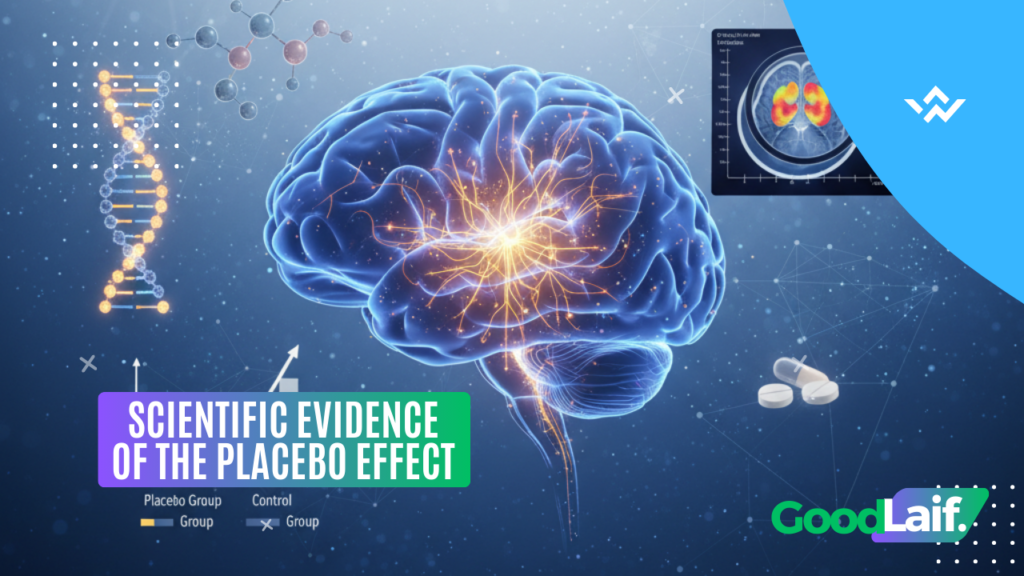
This effect has been widely tested in controlled clinical trials. In research, participants are usually divided into two groups: one receives real medication and the other receives a placebo. Interestingly, the placebo group often shows significant improvement.
This effect is most strongly seen in conditions such as:
- Chronic pain
- Mild to moderate depression
- Irritable bowel syndrome
- Sleep disorders
- Migraine headaches
However, it is important to note that placebos cannot cure serious diseases such as cancer, severe infections, or autoimmune diseases. Their effects are more symptomatic rather than curative.
Can the Mind Heal Disease?
The mind does have a significant influence on a person’s physical condition, especially in managing stress, pain, and quality of life. However, stating that the mind can completely cure disease is a claim that is not entirely accurate scientifically.
The placebo effect shows that positive suggestion can speed up recovery, but it does not replace evidence-based medical treatment. The mind can support the healing process, but it is not the only determining factor.
Difference Between the Placebo Effect and Real Healing
Real healing usually involves structural or biological improvement caused by effective medical therapy. Meanwhile, this effect focuses more on the patient’s perception and subjective response to symptoms.
For example, a patient may feel that their pain has decreased, but the underlying cause of the disease remains. Therefore, this treatment should not be considered a primary therapy, but rather a supporting factor in the healing process.
Ethical Implications in the Medical World
The use of placebos in medical practice raises ethical dilemmas. Giving a placebo without the patient’s knowledge is considered a violation of the principles of transparency and patient autonomy. Therefore, its use is currently more limited to clinical research contexts.
However, some recent studies show that open-label placebos, which are given with honest explanations to patients, can still provide benefits. This opens up new opportunities for a more ethical therapeutic approach.
Conclusion
The placebo effect proves that the mind plays an important role in the healing process. Positive beliefs and expectations can trigger biological responses that help reduce disease symptoms. However, this effect is not evidence that the mind can cure all types of diseases.
This effect should be understood as a supporting phenomenon in medical therapy, not a substitute for scientifically proven treatment. The best approach is to combine medical care with good psychological support to achieve optimal health outcomes.
READ ALSO ARTICLE: Hypnotherapy and the Science of Mind Transformation