


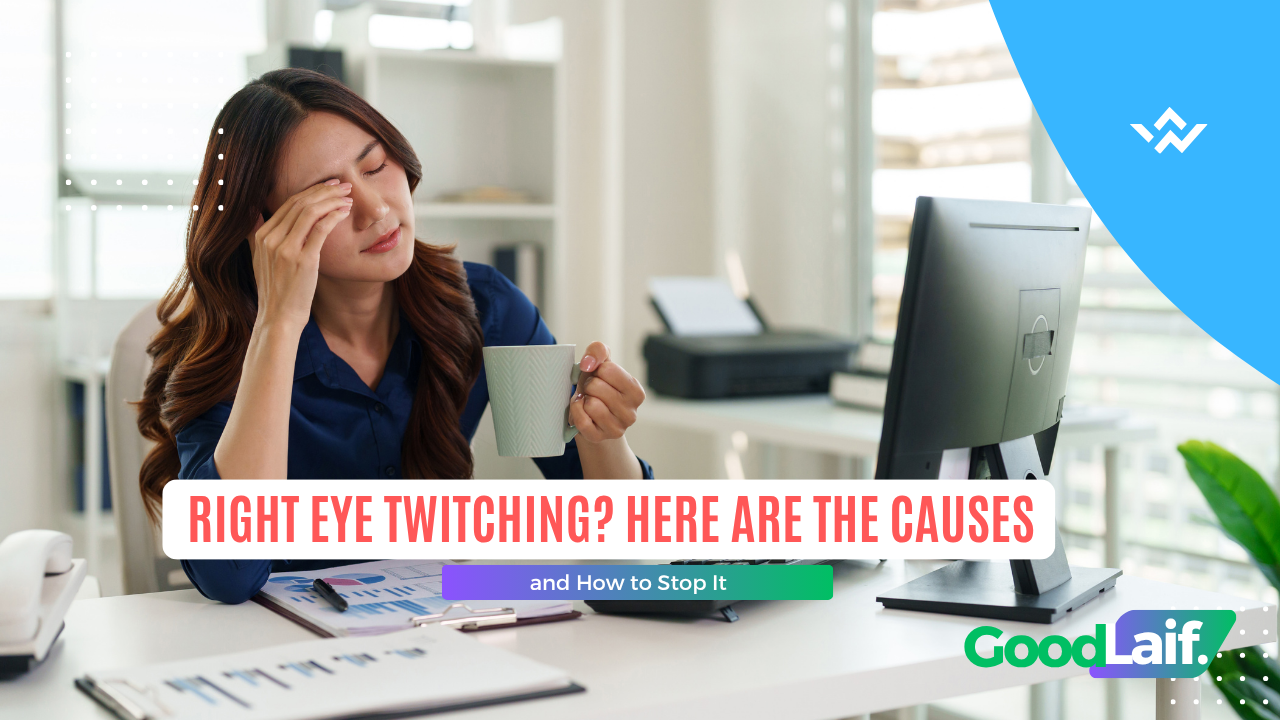
Has your right eye twitching been happening nonstop since this morning? You already tried sleeping, resting, even putting a cold compress on it, but the eyelid still keeps moving on its own. It feels annoying, distracting, and sometimes makes people worry that something serious is wrong.
Many people believe eye twitching is a sign of bad luck or good news coming soon. Medically, however, right eye twitching is usually just a signal that the eyelid muscles are tired, stressed, or experiencing mild nerve tension.
Although it is generally harmless, persistent twitching should still be taken seriously if it happens too often or comes with other symptoms.
5 Common Causes of Upper and Lower Right Eye Twitching


Eye twitching happens when small muscles around the eyelid move involuntarily.
Most cases are temporary, but several common triggers can cause it.
1. Lack of Sleep and Fatigue
This is one of the most common causes.
Not getting enough sleep makes the muscles and nerves around the eyelid easier to “overreact.” That is why the twitching keeps happening.
It becomes more common if you stay up late often or spend too much time looking at screens.
2. Too Much Caffeine
Coffee, tea, and energy drinks can overstimulate the muscles.
As a result, the muscles around the eyes become more likely to twitch.
3. Eye Strain from Too Much Screen Time
Looking at a laptop or phone for hours without breaks forces the eyes to work harder.
Eventually, the eyes become dry, irritated, and start twitching.
4. Stress and Anxiety
When you are stressed, the muscles in the body become more tense, including the muscles around the eyes.
That is why many people experience right eye twitching during stressful periods.
5. Dry or Irritated Eyes
Dry eyes can also trigger twitching.
This is more common in people who spend long hours in air-conditioned rooms or wear contact lenses too often.
Common Symptoms That May Appear Together
Besides the twitching itself, some people may also experience:
- Heavy eyelids
- Eye fatigue
- Dry eyes
- Sensitivity to light
- Difficulty focusing on screens
- Repeated twitching throughout the day
Fortunately, most cases improve on their own with enough rest.
6 Ways to Stop Right Eye Twitching Faster
To help your eyes relax, here are some simple things you can try at home.
1. Get Enough Sleep
Lack of sleep is one of the biggest triggers.
Try sleeping earlier and avoid staying up too late.
2. Reduce Screen Time
If you spend too much time looking at screens, try the 20-20-20 rule.
That means:
- Every 20 minutes
- Look at something 20 feet away
- For 20 seconds
This helps reduce eye strain.
3. Cut Back on Caffeine
If you drink a lot of coffee every day, try reducing it slowly.
Too much caffeine can make the eye muscles more active and trigger twitching.
4. Use a Warm Compress
A warm compress can help relax the eye muscles and reduce tension.
Simply soak a small towel in warm water, squeeze it gently, and place it over your eyes for 10–15 minutes. Repeat 2–3 times a day.
5. Manage Stress Properly
Sometimes the body simply needs rest.
Try relaxing activities, light exercise, or reducing stressful tasks that make your body tense.
6. Drink More Water
Dehydration can also make the eyes feel more tired.
Make sure you drink enough water, especially if you spend a lot of time in air-conditioned rooms.
Habits That Can Make Eye Twitching Worse
Some daily habits can make twitching happen more often:
- Staying up late constantly
- Using phones for too long
- Not drinking enough water
- Consuming too much caffeine
- Rubbing the eyes too often
These habits make the eye muscles tire more easily.
Severe Right Eye Twitching: When Should You See a Doctor?
Even though eye twitching is usually harmless, there are situations where medical attention is needed.
See a doctor immediately if:
- The twitching lasts for weeks
- The eyelid becomes difficult to open
- The eyelid becomes swollen or red
- The twitching spreads to the cheek, lips, or eyebrows
- Your vision becomes affected
In some cases, persistent twitching may be related to nerve disorders or other medical conditions.
Read Also : Red Eye Drops, Can They Really Relieve Eye Irritation Fast?
Conclusion
Right eye twitching is commonly caused by fatigue, stress, lack of sleep, or excessive screen time.
Thankfully, most cases improve with proper rest and healthier daily habits.
Starting tonight, put your phone away one hour before bed and try a warm compress. Eye twitching is not a myth — it is often your body asking for rest.
This article is for educational purposes only and is not a substitute for professional medical advice. If your eye twitching becomes severe or persistent, consult a doctor immediately.