


Have you ever been diligent with your skincare routine, only to break out every time you use sunscreen? Maybe your skin feels irritated, greasy, or uncomfortable after a few hours. If that sounds familiar, the problem may not be your skincare routine—it could be choosing the wrong sunscreen for sensitive and acne-prone skin.
Many people with sensitive or acne-prone skin avoid sunscreen because they worry it will clog pores or trigger new breakouts. In reality, skipping sunscreen can make redness worse, slow the fading of acne marks, and leave your skin more vulnerable to irritation from UV exposure.
This article covers how to choose the right sunscreen for sensitive and acne-prone skin, including what ingredients to look for, what to avoid, and common mistakes that may be causing breakouts.
Does Acne-Prone Skin Need Sunscreen?
Absolutely.
UV rays can increase inflammation in acne-prone skin and make post-acne marks last longer. Sun exposure may also worsen redness and sensitivity, especially if you’re using acne treatments that make the skin more vulnerable to sunlight.
That’s why wearing sunscreen every day is important—even if you spend most of your time indoors.
How to Choose Sunscreen for Sensitive and Acne-Prone Skin
1. Look for a Non-Comedogenic Formula
A non-comedogenic sunscreen is designed to reduce the risk of clogged pores, making it a better option for acne-prone skin.
2. Choose a Lightweight Texture
Gel, fluid, or lightweight lotion formulas are often more comfortable for oily, sensitive, and acne-prone skin than thick or heavy creams.
3. Avoid Potential Irritants
If your skin is easily irritated, look for products with minimal fragrance and avoid formulas with high amounts of alcohol that may cause dryness or stinging.
4. Use an Adequate SPF
For daily use, choose a sunscreen with at least SPF 30 and broad-spectrum protection against both UVA and UVB rays.
5. Perform a Patch Test
Before applying a new sunscreen to your entire face, test it on a small area of skin for a few days to check for irritation or breakouts.
Ingredients in Sunscreen for Sensitive and Acne-Prone Skin
Some ingredients are commonly found in sunscreens designed for sensitive and acne-prone skin:
- Zinc Oxide
- Titanium Dioxide
- Niacinamide
- Centella Asiatica
- Hyaluronic Acid
These ingredients are often used to provide sun protection while helping maintain skin comfort and hydration.
3 Examples of Sunscreen for Sensitive and Acne-Prone Skin

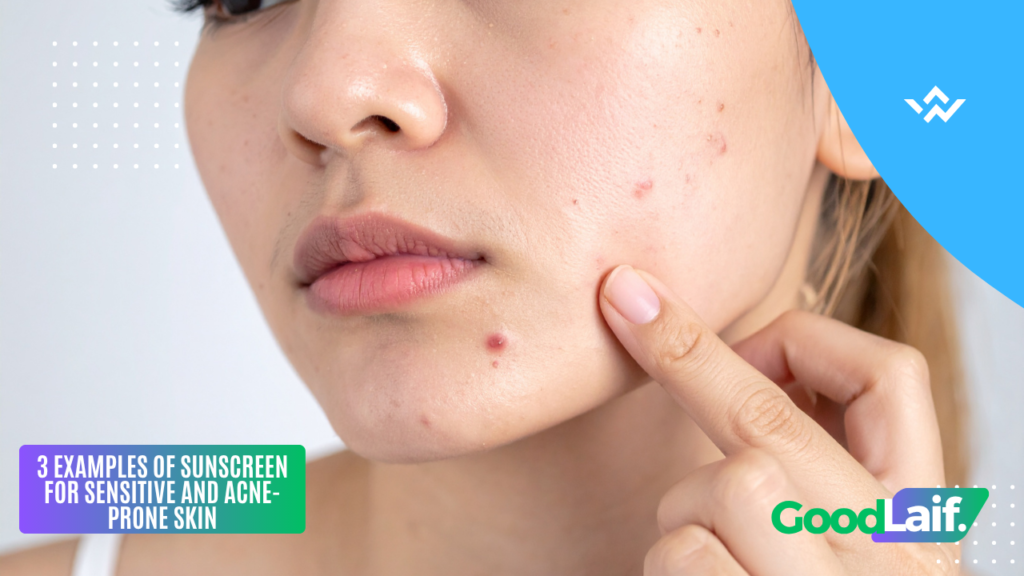
Some products that are frequently chosen by people with sensitive and acne-prone skin include:
- Wardah UV Shield Acne Calming Sunscreen SPF 35
- Azarine Hydrasoothe Sunscreen Gel SPF 45
- Skin Aqua UV Moisture Gel SPF 50
Note: Every skin type is different. Always perform a patch test before using any product regularly.
Why Does Sunscreen Cause Breakouts? These 3 Mistakes Could Be the Reason
1. The Formula Isn’t Right for Your Skin
Not every sunscreen works for every skin type. Heavy formulas may feel greasy and contribute to clogged pores in some individuals.
2. Inadequate Cleansing
Sunscreen, oil, sweat, and dirt can build up on the skin throughout the day. If not removed properly, they may increase the risk of clogged pores.
3. Blaming Sunscreen Too Quickly
Breakouts are not always caused by sunscreen. Hormonal changes, stress, diet, and other skincare products can also play a role.
Read Also : Basic Skincare for Acne-Prone Skin to Prevent Breakouts
Conclusion
Choosing the right sunscreen for sensitive and acne-prone skin may take some trial and error, but it is well worth the effort.
Focus on products that are non-comedogenic, lightweight, broad-spectrum, and suitable for sensitive skin. Don’t forget to perform a patch test before adding a new sunscreen to your daily routine.
With the right product, you can protect your skin from sun damage without worrying about making acne worse.
Don’t skip sunscreen just because you’re afraid of breakouts. Sensitive and acne-prone skin needs daily sun protection too.