
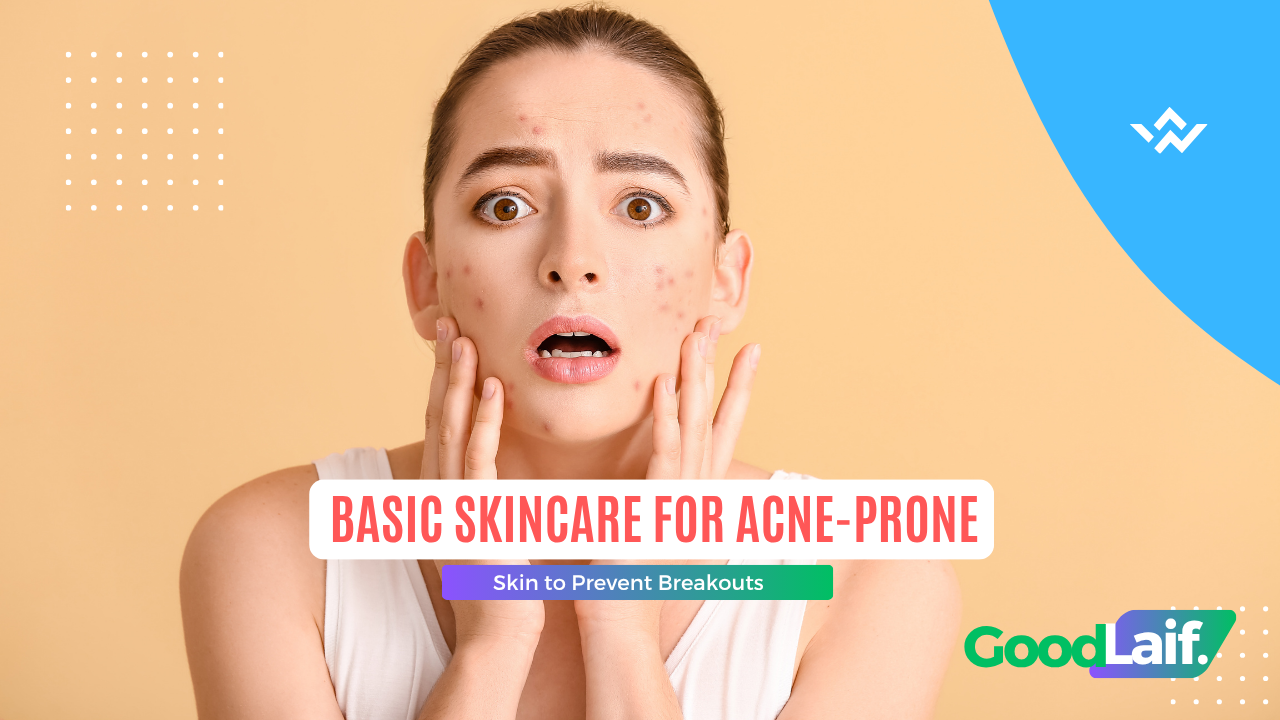
Have you ever tried many skincare products, but your acne just keeps coming back? One pimple disappears, then another shows up the next day. Eventually, many people start randomly trying products because they still have not found the right basic skincare for acne-prone skin.
In reality, the problem is often not about expensive skincare. Sometimes the routine is simply too complicated and stresses the skin out. That is why having a simple but consistent routine is very important.
Acne-prone skin is usually more sensitive to harsh products or too many skincare layers. In many cases, a basic routine works better than using too many active products at once.
Why Does Acne-Prone Skin Need a Simple Routine?
Many people believe using more skincare products will make acne disappear faster. However, too many products can actually damage the skin barrier and make breakouts worse.
Especially when multiple strong active ingredients are used together, such as exfoliating acids, retinol, and harsh scrubs.
As a result, the skin may become:
- More red and sensitive
- Easily inflamed
- Dry or irritated
- More difficult to calm down
That is why basic skincare for acne-prone skin focuses on stabilizing the skin first instead of making it instantly flawless overnight.
Basic Skincare for Acne-Prone Skin You Should Have
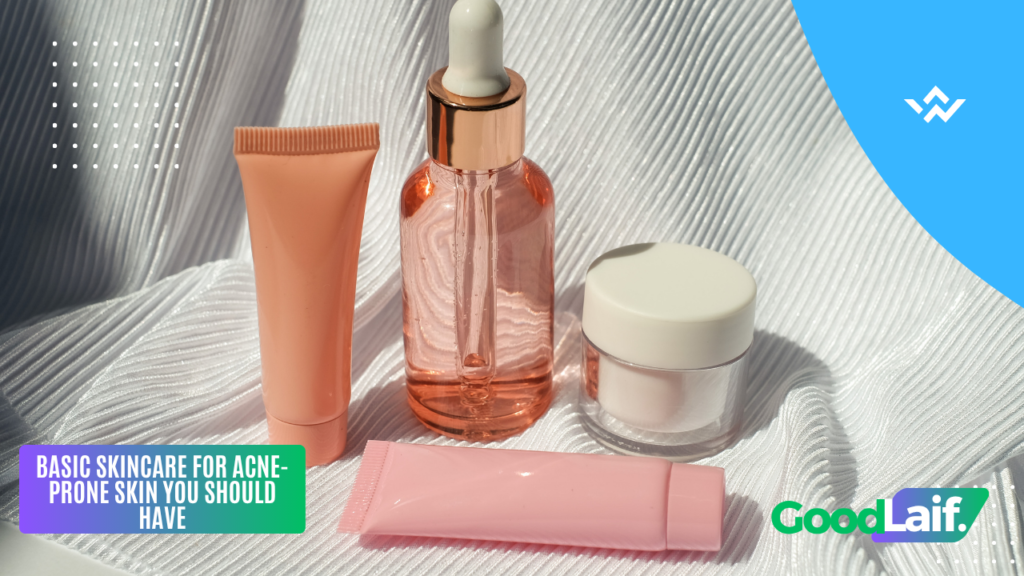
A good skincare routine for acne-prone skin does not need too many steps. Focus on these essentials first.
1. Gentle Facial Cleanser
The first step is using a gentle face wash.
Choose a cleanser that does not leave your skin feeling overly tight after washing. If the skin becomes too dry, oil production can actually increase.
If your skin is acne-prone, avoid harsh scrubs that may irritate active pimples.
2. Moisturizer Still Matters
Many people avoid moisturizer because they are afraid it will cause more acne. In fact, acne-prone skin still needs hydration.
Moisturizer helps protect the skin barrier and reduces irritation.
Try choosing lightweight moisturizers with ingredients such as:
- Ceramide
- Hyaluronic acid
- Niacinamide
These ingredients help maintain hydration without feeling heavy on the skin.
3. Never Skip Sunscreen
This is one of the most ignored skincare steps.
Without sun protection, acne marks can become darker and harder to fade.
Choose a lightweight non-comedogenic sunscreen that feels comfortable for daily use.
4. Use Acne Treatments Carefully
If you want to use acne treatments like salicylic acid or benzoyl peroxide, use them in moderation.
Using too many active ingredients at once can irritate the skin and worsen breakouts.
Habits That Make Acne Harder to Heal
Besides skincare, some small habits can keep acne coming back:
- Touching the face too often
- Switching skincare products too quickly
- Sleeping without washing the face
- Rarely changing pillowcases
- Picking or squeezing pimples
These habits are often one of the biggest reasons breakouts continue to happen.
When Should You See a Dermatologist?
If acne becomes painful, severely inflamed, leaves deep scars, or does not improve for months, it may be time to consult a dermatologist.
Some types of acne require medical treatment and cannot be treated with basic skincare alone.
Read Also : How to Treat Oily Skin Naturally to Prevent Acne and Dullness
Conclusion
In short, basic skincare for acne-prone skin does not need to be complicated or filled with too many products. The most important thing is maintaining a healthy skin barrier and choosing skincare that matches your skin’s needs.
Start with the basics first: a gentle cleanser, moisturizer, and sunscreen. Once your skin becomes more stable, you can slowly add other products if needed.
Starting tonight, stop trying too many skincare products at once. Sometimes your skin only needs a simple and consistent routine to calm breakouts faster.
This article is for educational purposes only and is not a substitute for professional medical advice. If your acne becomes severe or painful, consult a dermatologist immediately.







+ There are no comments
Add yours