
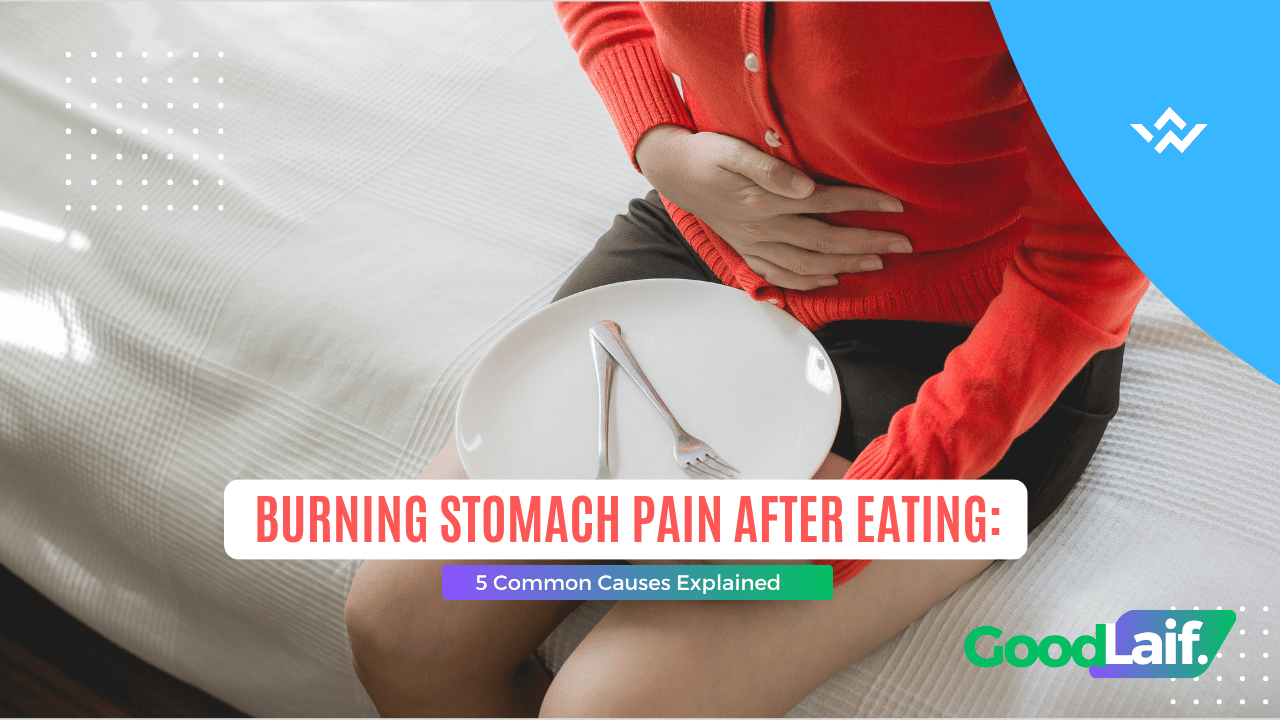
Burning stomach pain after eating can be frustrating. Instead of feeling satisfied after a meal, you end up with a burning sensation or discomfort in your upper stomach. It can be especially annoying when you’ve been looking forward to eating, only to feel worse afterward. If it only happens once in a while, it may not be a serious problem. But if it keeps happening after most meals, it’s worth paying attention.
Many people assume a burning stomach after eating is simply caused by eating too late. In reality, the cause can vary. It could be acid reflux, gastritis, certain foods, or even a stomach ulcer. Understanding the cause is the first step toward finding the right treatment instead of guessing or taking medication without knowing what’s really going on.
According to healthcare experts, a burning sensation in the stomach after eating is commonly linked to digestive conditions involving the stomach or upper digestive tract. If the symptoms become frequent or more severe, you should seek medical advice.
5 Common Causes of Burning Stomach Pain After Eating
In many cases, this burning feeling happens because the stomach lining becomes irritated. After eating, you should feel comfortable—not like your stomach is burning. Here are some of the most common reasons.
1. Acid Reflux (GERD)
This is one of the most common causes.
When stomach acid flows back into the esophagus, it can cause a burning feeling in the upper stomach or chest, frequent burping, and a sour taste in the mouth. Symptoms often become worse after large meals or after eating spicy and fatty foods.
2. Gastritis
Gastritis happens when the stomach lining becomes inflamed.
Besides a burning sensation, you may also feel bloated, nauseous, or full after eating only a small amount. Unlike GERD, gastritis is more likely to flare up when you’ve skipped meals or your stomach has been empty for a long time.
3. Spicy or Acidic Foods
If you enjoy spicy dishes or acidic foods, they could be triggering your symptoms.
Hot peppers, spicy sauces, citrus fruits, tomatoes, and vinegar-based foods may irritate a sensitive stomach. Since everyone’s triggers are different, it’s helpful to notice which foods make your symptoms worse.
4. Eating Too Much at Once
Large meals force your stomach to work harder.
As a result, you may feel overly full, bloated, and experience a burning sensation after eating, especially if you eat too quickly.
5. Stomach Ulcers
If the burning pain keeps coming back and doesn’t improve, a stomach ulcer could be the reason.
Unlike GERD, stomach ulcers often cause a stronger burning pain when your stomach is empty or a few hours after eating. This happens because there’s an open sore in the stomach lining. The pain is usually sharper and tends to return repeatedly.
Which of these sounds most like what you’ve been experiencing?
How to Relieve Burning Stomach Pain After Eating
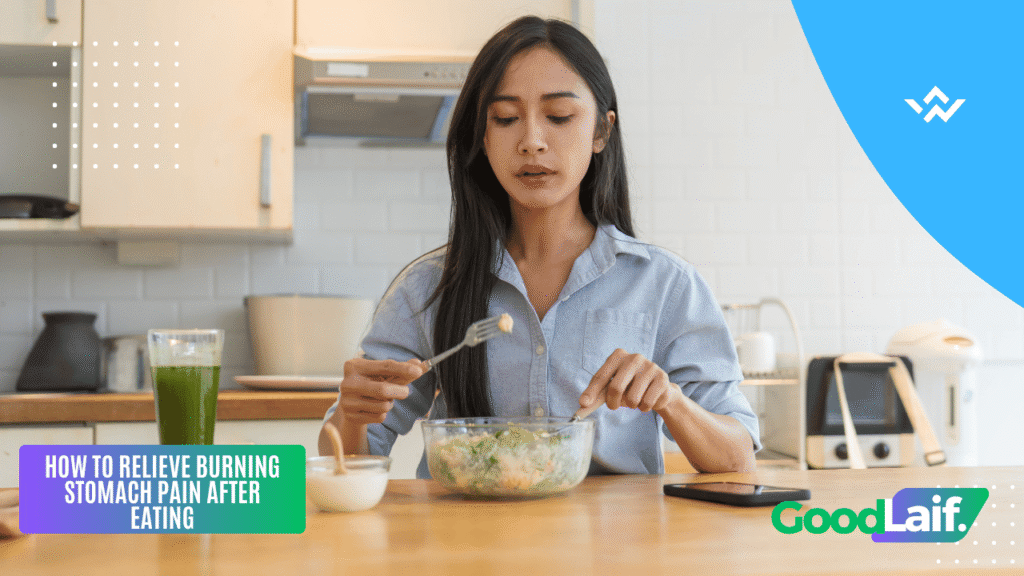
If your symptoms are still mild, try these simple steps at home first.
- Eat smaller meals more frequently instead of eating large portions.
- Avoid spicy, acidic, greasy, or fried foods if they trigger your symptoms.
- Don’t lie down immediately after eating. Wait at least two to three hours.
- Drink enough water to help your digestive system work more comfortably.
- Manage your stress. You may have noticed that when you’re under pressure, your stomach starts acting up too.
If you have an existing medical condition or take prescription medications regularly, talk to your healthcare provider before trying self-treatment. If your symptoms don’t improve after one to two weeks, schedule an appointment with your doctor.
When Should You See a Doctor?
See a doctor as soon as possible if you experience any of the following:
- Burning stomach pain that doesn’t go away.
- Vomiting repeatedly or vomiting blood.
- Black or tarry stools.
- Unexplained weight loss.
- Severe pain that makes eating difficult.
If you notice one or more of these symptoms, don’t wait. A healthcare professional can identify the cause and recommend the right treatment.
Read Also : Stomach Pain After Eating: Causes and How to Relieve It Safely
The Bottom Line
Burning stomach pain after eating shouldn’t be ignored if it keeps coming back. While it may sometimes be caused by food choices or eating habits, it can also be a sign of an underlying digestive condition that needs medical attention.
This article is for informational purposes only and isn’t a substitute for professional medical advice. If your symptoms persist or become worse, don’t hesitate to consult a doctor.
Have you ever experienced burning stomach pain after eating? What foods usually trigger it for you? Share your experience in the comments!





+ There are no comments
Add yours