


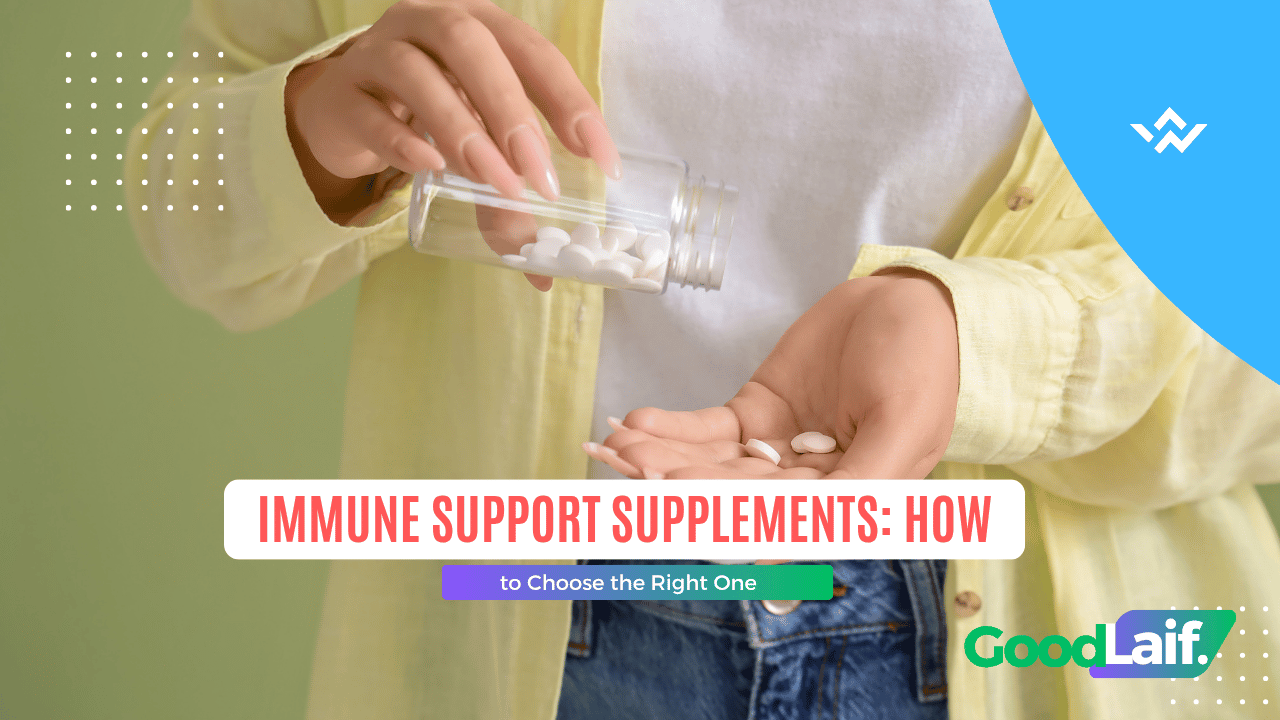
Immune support supplements are often the first thing people look for when they start feeling run-down or when everyone around them seems to be getting sick. You may have even thought about buying one right away to avoid catching an illness. That’s completely understandable, but there are a few things you should know before taking one.
Keep in mind that supplements aren’t a magic solution that makes your body 100% immune to disease. Their main job is to help fill nutritional gaps, especially if your daily diet isn’t the best. That’s why supplements work best when they’re paired with a healthy lifestyle.
What Are Immune Support Supplements?
Immune support supplements contain vitamins, minerals, or natural ingredients that help support your immune system.
Common ingredients include vitamin C, vitamin D, zinc, and herbal extracts such as echinacea or meniran. For example, vitamin C helps protect your body’s cells from free radicals, while zinc supports the body’s recovery process. Since each ingredient has a different role, not everyone needs the same type of supplement.
So, don’t buy a supplement just because it’s trending on social media or a friend recommends it.
When Should You Take Immune Support Supplements?


The truth is, not everyone needs to take supplements every day.
You might consider taking one if you’re not getting enough nutrients from your daily meals.
Some situations where supplements may be helpful include:
- You’ve been sleeping too little for a long time.
- Your diet isn’t well balanced.
- You’re recovering from an illness.
- Your schedule is so busy that you often feel worn out.
- You rarely eat fruits and vegetables.
If you’re healthy and already getting enough nutrients from food, you may not need an additional supplement.
How to Choose the Right Immune Support Supplement
Here are a few tips to help you choose wisely.
1. Choose Based on Your Needs
Not all supplements contain the same ingredients. Some focus on vitamin C, while others combine vitamin D, zinc, and other nutrients.
Choose a supplement that matches your body’s needs instead of buying one just because it’s popular.
2. Check the Ingredients
Take a moment to read the label before buying.
Make sure the ingredients, dosage, and directions for use are clearly listed. Avoid taking several supplements with similar ingredients at the same time, as you could end up getting too much of certain vitamins.
3. Buy Products From Trusted Brands
Choose supplements from reputable brands that meet your country’s safety and quality standards.
This helps ensure you’re getting a product that’s safe and reliable.
4. Consider Your Health Condition
If you’re pregnant, breastfeeding, have a medical condition, or take medication regularly, don’t choose supplements on your own.
It’s better to talk to a healthcare professional first so you can find the type and dosage that’s right for you.
Can Immune Support Supplements Prevent Illness?
The short answer is no.
Supplements can help fill nutritional gaps, but they can’t make you completely immune to viruses or bacteria. Your immune system is influenced by many factors, including your diet, sleep quality, physical activity, stress levels, and overall health.
So, don’t expect supplements to make up for unhealthy habits. They won’t do much if you’re constantly staying up late, rarely exercising, and eating poorly.
When Should You See a Doctor?
If you get sick often, feel tired all the time, or aren’t sure which supplement is right for you, it’s a good idea to talk to a doctor.
This is especially important if you’re pregnant, breastfeeding, have a chronic medical condition, or take prescription medications. A healthcare professional can help determine whether you actually need a supplement and recommend the right one for your situation.
Read Also : Is Boosting Your Immune System Dangerous?
The Bottom Line
Immune support supplements can help fill nutritional gaps when your diet isn’t providing enough vitamins and minerals. However, they should never replace healthy eating and a balanced lifestyle.
This article is for general information only and isn’t a substitute for professional medical advice. If you’re unsure whether you need a supplement, consult a doctor or another qualified healthcare professional.
Do you regularly take immune support supplements, or do you rely more on a healthy diet? Share your experience in the comments!