
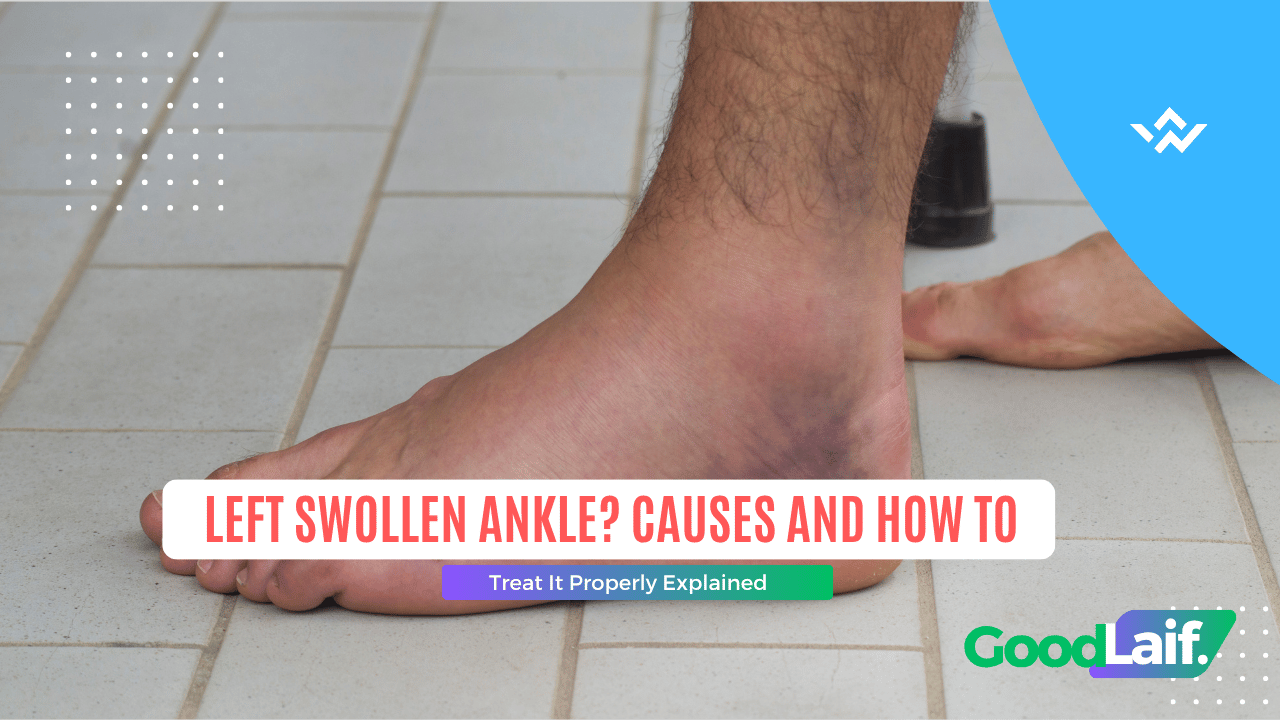
A left swollen ankle can be worrying, especially when it appears out of nowhere. It can feel uncomfortable, make walking painful, and even make it hard to wear your favorite shoes. You were ready to head out, then suddenly noticed your left ankle was swollen. Annoying, right? It’s only natural to wonder why it’s happening on just one side.
The good news is that a swollen left ankle isn’t always a sign of something serious. Sometimes it’s caused by a mild sprain or simply standing for too long. In other cases, it may be linked to joint problems, circulation issues, or an infection. That’s why it’s important to understand the cause before trying to treat it yourself.
When swelling affects only one ankle, it’s usually related to a problem in that specific area. Think back to when it started and what you were doing before you noticed it.
5 Common Causes of a Left Swollen Ankle

Before you panic, let’s look at five of the most common reasons your left ankle may be swollen.
1. Ankle Sprain or Injury
This is the most common cause.
If you’ve recently exercised, twisted your ankle, or taken a bad step, the ligaments around your ankle may have stretched or torn. That can lead to swelling, pain, and sometimes bruising.
The pain usually gets worse when you walk or put weight on your foot.
2. Standing or Sitting for Too Long
If your job requires you to stand or sit for hours, fluid can build up around your ankle.
This often happens to cashiers, teachers, factory workers, or even people who work from home and spend most of the day sitting. The swelling is usually more noticeable in the evening and often improves after resting.
3. Arthritis
If your swollen ankle is also painful and stiff, arthritis could be the cause.
The joint may feel warm and become more painful when you move it.
4. Infection
If the swelling comes with redness, warmth, or fluid draining from the area, don’t ignore it.
An infection around the ankle can cause swelling on one side and usually requires medical treatment.
5. Blood Vessel or Lymphatic Problems
This isn’t as common, but it’s still possible.
Conditions such as deep vein thrombosis (DVT) or poor lymphatic drainage can cause swelling in one ankle. If the swelling appears suddenly, becomes painful, or your calf also swells, see a doctor as soon as possible.
Which of these sounds most like what you’re experiencing?
How to Treat a Left Swollen Ankle
If the swelling is mild, you can usually try treating it at home first.
One of the easiest methods is the R.I.C.E. approach:
- R – Rest: Stop strenuous activities and let your ankle rest.
- I – Ice: Apply a cold pack wrapped in a cloth for 15–20 minutes several times a day.
- C – Compression: Wrap the ankle with an elastic bandage, but don’t make it too tight.
- E – Elevation: Raise your foot on a pillow while lying down.
Also, avoid standing or sitting in the same position for too long.
You’ve probably experienced this before. After a long day, your ankle suddenly feels heavy and swollen. Taking short walks and moving your legs regularly can help improve blood circulation.
If you have diabetes, vascular disease, or take prescription medications regularly, talk to your doctor before treating the swelling at home.
When Should You See a Doctor?
If your swollen ankle doesn’t improve after a few days or keeps getting worse, don’t wait too long.
See a doctor if you notice any of these signs:
- The swelling doesn’t go down.
- The pain makes it difficult to walk.
- Your ankle becomes red, warm, or starts draining pus.
- The swelling appears suddenly without an obvious reason.
- Your calf also becomes swollen or painful.
- You experience chest pain or shortness of breath.
Feeling worried is completely understandable. But getting checked early is always better than waiting until the problem becomes more serious.
Read Also : Foot Pain Medicine at Pharmacies and How to Use It Safely
The Bottom Line
A left swollen ankle is most commonly caused by a sprain, standing or sitting for too long, arthritis, an infection, or problems with your blood vessels. Some cases improve with home care, while others need medical attention.
This article is for informational purposes only and isn’t a substitute for professional medical advice. If the swelling doesn’t go away, gets worse, or comes with other symptoms, don’t hesitate to see a healthcare provider.
Have you ever had a swollen left ankle? What caused it, and what helped you recover? Share your experience in the comments!








+ There are no comments
Add yours