
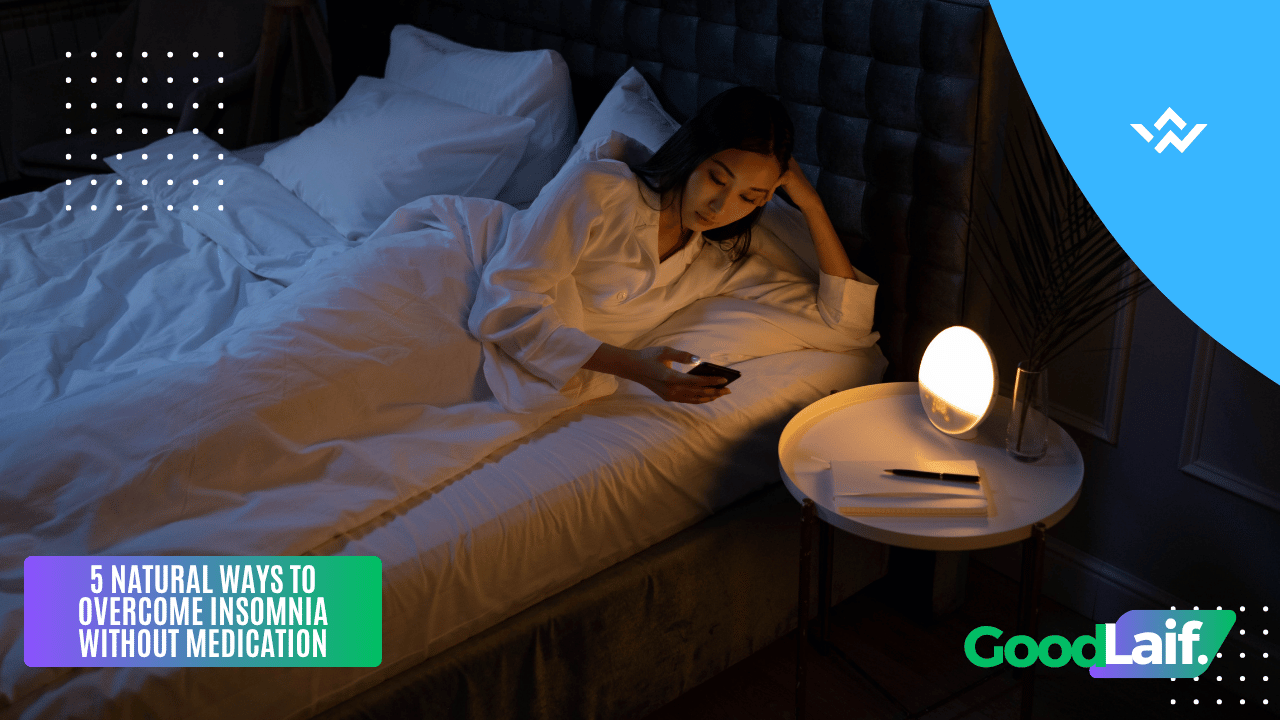
Looking for natural ways to overcome insomnia? You’re definitely not alone. Have you ever felt completely exhausted, but the moment you lie down, your eyes just won’t close? You keep changing positions, checking the clock, and before you know it, it’s already midnight. The next morning, you wake up feeling tired, sluggish, and far from refreshed. Frustrating, isn’t it? If this keeps happening, hold off on reaching for sleeping pills just yet.
Trouble sleeping can happen for many reasons. Stress, too much coffee, scrolling on your phone before bed, or an inconsistent sleep schedule can all make it harder to fall asleep. The good news is that small lifestyle changes are often enough to help you sleep better again.
5 Natural Ways to Overcome Insomnia Without Medication
You don’t need to make big changes overnight. Start with these five simple habits.
1. Put Your Phone Away Before Bed
Do you often find yourself scrolling through social media until your eyes get tired?
The blue light from your phone keeps your brain alert, making it harder to feel sleepy. Try putting your phone away 30–60 minutes before bedtime. If that feels difficult, simply reduce your screen time little by little each night.
2. Go to Bed and Wake Up at the Same Time
Your body has its own internal clock.
When your bedtime changes every day, your body gets confused about when it’s supposed to rest. Try going to bed and waking up at the same time every day—even on weekends.
3. Avoid Coffee and Caffeinated Drinks at Night
Still drinking coffee in the afternoon or evening?
Caffeine sticks around in your body for hours. That’s why you may still feel wide awake even when you’re physically exhausted. If you often struggle to sleep, try avoiding caffeine later in the day.
4. Make Your Bedroom More Comfortable
Sometimes the reason you’re lying awake isn’t your body—it’s your bedroom.
Dim the lights, keep the room cool if possible, and reduce noise. A quiet, comfortable bedroom makes it much easier for your body to relax and fall asleep.
5. Relax Before Going to Bed
If your mind is full of thoughts, your body won’t relax either.
Take a few deep breaths, listen to calming music, or read a light novel before bed. Just don’t open work emails. Simple habits like these can make a surprisingly big difference.
Now that you know what to do, let’s also look at a few habits that secretly make it harder to fall asleep.
Habits That Can Make It Harder to Sleep
Besides building a healthier bedtime routine, try avoiding these habits:
- Eating a heavy meal before bed. A full stomach can leave you feeling uncomfortable and make it difficult to fall asleep.
- Taking long naps during the day. You may not feel sleepy when bedtime comes.
- Doing intense exercise right before bed. It can leave your body feeling energized instead of relaxed.
- Drinking caffeinated beverages at night. The effects can last for several hours.
- Constantly checking the clock. Watching the time often increases stress and makes falling asleep even harder.
These habits may seem harmless, but they can have a big impact on your sleep quality.
When Should You See a Doctor?
If you have trouble sleeping only once in a while, there’s usually no need to worry.
However, if your insomnia lasts for several weeks, starts affecting your daily life, or comes with loud snoring, breathing problems during sleep, or ongoing anxiety, it’s a good idea to see a doctor. There could be an underlying health condition that needs attention.
Read Also : Causes of Drooling During Sleep: Common Causes and Solutions
The Bottom Line
Try these natural ways to overcome insomnia before turning to sleeping pills. Tonight, choose just one habit to start with. You don’t have to change everything at once. Whether it’s putting your phone away earlier, sticking to a regular sleep schedule, avoiding caffeine, or creating a more relaxing bedroom, every small step can help.
If you’ve tried these tips and you’re still lying awake night after night, don’t hesitate to talk to a healthcare professional to find the real cause.
Which one keeps you awake the most—scrolling on your phone, work stress, or too much coffee? Share your experience in the comments!
Note: This article is for general informational purposes only and should not replace professional medical advice. If your sleep problems continue, consult a healthcare professional.






+ There are no comments
Add yours