
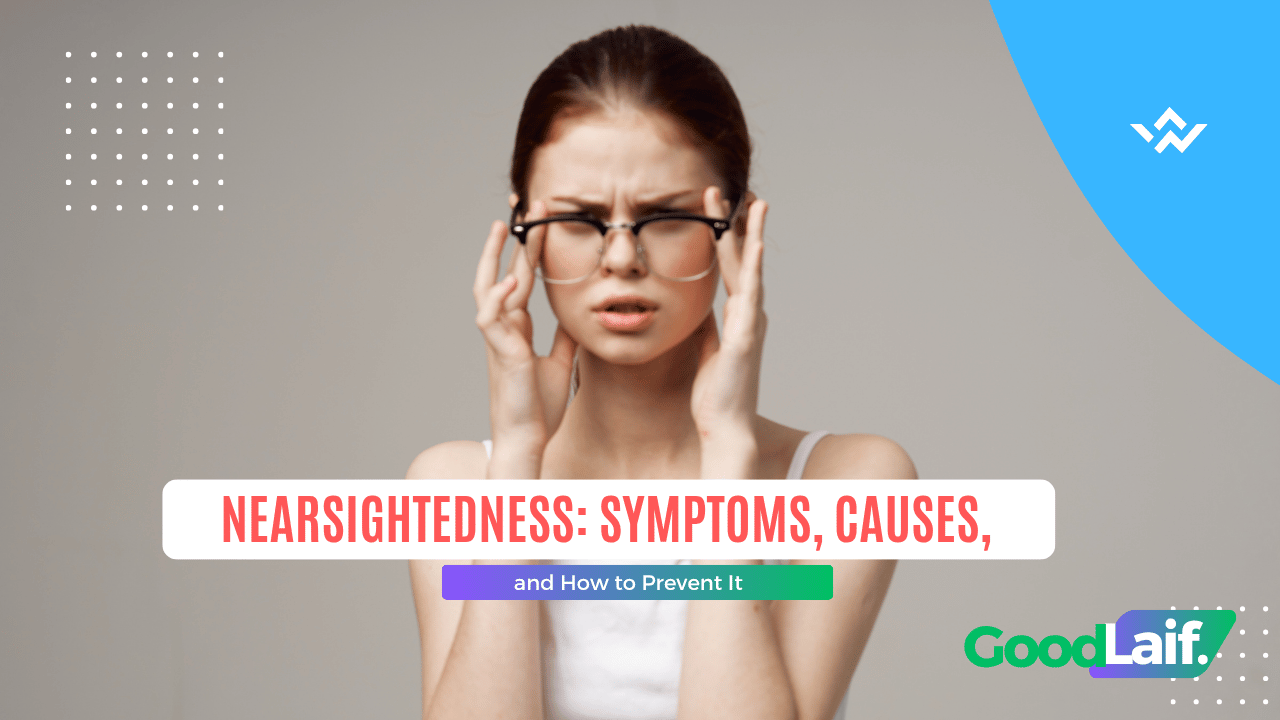
Don’t worry, you’re not alone. Nearsightedness or myopia is quite common, especially among children, teenagers, and people who spend a lot of time doing close-up activities. So, what actually causes it?
What Are the Symptoms of Nearsightedness?
Nearsightedness, also known as myopia, usually makes objects in the distance look blurry, while nearby objects remain easier to see.
Some common signs include:
- Having trouble seeing the writing on a board or objects that are far away. This is one of the signs of nearsightedness.
- Frequently squinting to make things look clearer.
- Headaches after looking into the distance or focusing for too long.
- Blurry vision when looking at road signs, the TV, or people’s faces from a distance.
If you often experience some of these signs, don’t just try to guess the cause yourself. An eye examination can help determine whether you actually have myopia.
So, if you notice some of these symptoms, what exactly can cause your vision to become nearsighted?
Why Does Nearsightedness or Myopia Happen?

Myopia occurs when light entering the eye doesn’t focus properly on the retina. As a result, distant objects appear blurry.
Several factors can contribute to this condition, including genetics and habits that involve prolonged close-up activities. If one or both parents have myopia, a child may also have a higher risk of developing it.
1. Scrolling on Your Phone Nonstop
Using your phone doesn’t automatically cause myopia. But if you spend hours scrolling through TikTok, playing games from afternoon until night, or constantly looking at a screen from a close distance, your eyes can become tired.
Too much close-up activity may also play a role in the development of myopia, especially in children and teenagers, as their eyes spend less time focusing on distant objects.
Try the 20-20-20 rule: every 20 minutes, look at something about 20 meters away for 20 seconds. This gives your eyes a break from constantly focusing on nearby objects.
2. Rarely Spending Time Outdoors
If you spend most of your time indoors, at school, or in front of a computer, try to spend some time outside.
Natural outdoor light encourages the eyes to look farther into the distance. This has been linked to a lower risk of myopia in children and teenagers who are still growing.
You don’t need to do intense exercise. Taking a walk, playing outside, or simply spending some time in an open space can be a good option.
3. Reading From a Very Close Distance
Do you have a habit of reading while lying down or holding a book very close to your face? Try to change this habit.
Reading from a very close distance for a long time can make your eyes feel tired. Make sure the lighting is adequate and take regular breaks if you’ve been reading for a long time.
So, How Can You Prevent It?
You don’t need to change all your habits at once. Start with simple things like taking breaks after spending a long time looking at a screen, keeping a comfortable distance when reading, using adequate lighting, and spending more time outdoors.
If you study or work in front of a screen every day, don’t forget to give your eyes regular breaks.
Read Also : Symptoms of Nearsightedness: Early Signs You Shouldn’t Ignore
When Should You Get Your Eyes Checked?
If your vision starts becoming blurry, you frequently squint, or you have trouble seeing distant objects, it’s a good idea to have your eyes checked by an ophthalmologist or optometrist.
This is especially important if your vision changes suddenly. Seek medical attention if you experience flashes of light or suddenly notice many new spots or shadows in your vision.
If it feels like a curtain is covering part of your vision, don’t delay getting medical attention.
So, even though nearsightedness can’t always be prevented, you can still take care of your eye health through your daily habits. Have you given your eyes a proper break today?
This article is for general information only. If your symptoms continue, consult an ophthalmologist or optometrist.







+ There are no comments
Add yours