



Have you ever experienced a toothache that spreads to your head and makes it difficult to focus on your daily activities? Pain that starts in a tooth can gradually spread to the head, temples, ears, and jaw. It can be incredibly uncomfortable, which is why you shouldn’t ignore it—especially if it lasts for several days or keeps getting worse.
According to the American Dental Association (ADA), tooth pain is most commonly caused by tooth decay, infection, or inflammation of the tissues surrounding the tooth. This article is for informational purposes only and should not replace a professional dental examination or diagnosis. If the pain does not improve, consult a dentist to identify the underlying cause and receive appropriate treatment.
Why Can a Toothache Spread to the Head?
Why does a toothache sometimes reach the head? The reason is that your teeth, jaw, and head are connected by a major nerve called the trigeminal nerve. When a tooth becomes inflamed or infected, pain signals can travel through this nerve and spread to the head, temples, ears, or even the neck. That’s why a toothache can sometimes feel much more widespread than expected.
Common Causes of a Toothache That Spreads to the Head

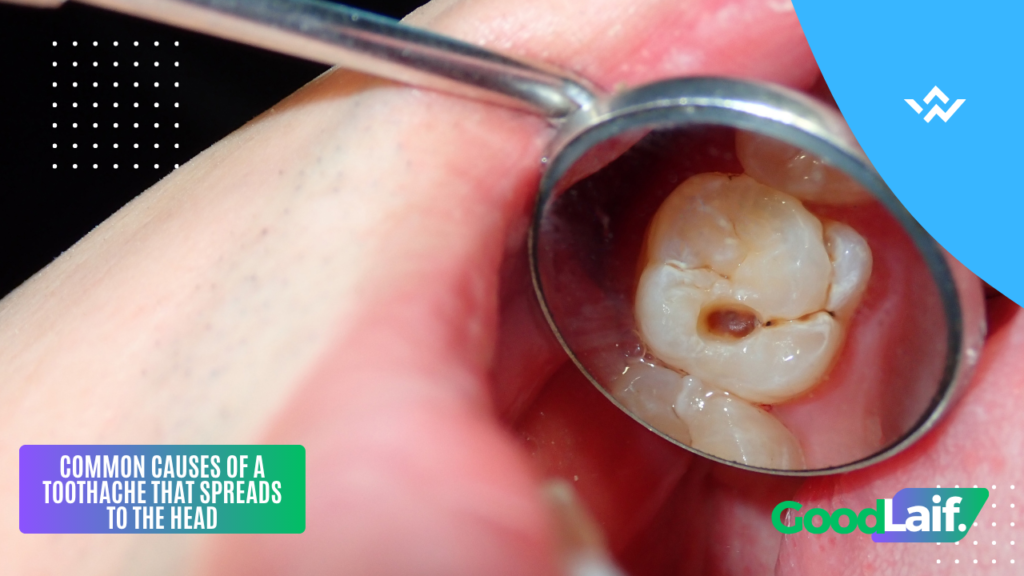
1. Tooth Decay
Untreated cavities can reach the inner nerve of the tooth, causing severe pain that radiates to the head. If your tooth has been sensitive or painful for several days, don’t delay a dental checkup.
2. Dental Abscess
A dental abscess is a pocket of pus caused by a bacterial infection. Besides throbbing pain, it may also cause swelling, fever, bad breath, and headaches. Prompt treatment helps prevent the infection from spreading.
3. Impacted Wisdom Teeth
Wisdom teeth that grow at an angle or fail to erupt properly can press against neighboring teeth, leading to jaw pain that spreads to the head. Early evaluation can determine whether treatment is necessary.
4. Gum Disease
Inflamed gums can make the tissues around the teeth sore and sensitive. In more severe cases, the discomfort may spread to the head. Bleeding or swollen gums should not be ignored.
5. Teeth Grinding
Grinding or clenching your teeth, especially during sleep, can strain the jaw muscles and trigger both headaches and tooth pain. If this happens frequently, consult a dentist to prevent long-term damage.
How to Relieve a Toothache That Spreads to the Head
Treatment depends on the underlying cause. While waiting to see a dentist, you can try the following to reduce discomfort:
- Brush your teeth gently and remove any trapped food particles.
- Rinse your mouth with warm salt water to help reduce mild inflammation.
- Apply a cold compress to the cheek if swelling is present.
- Take pain relievers according to the package instructions or your doctor’s advice.
- Avoid foods and drinks that are very hot, cold, or sugary, as they may worsen the pain.
Remember, these methods only provide temporary relief and do not treat the root cause. If the pain continues, schedule a dental appointment as soon as possible.
When Should You See a Dentist?
See a dentist immediately if you experience any of the following:
- Pain lasting more than 1–2 days.
- Swelling of the face or gums.
- Pus draining from the gums.
- Fever accompanied by tooth pain.
- Difficulty opening your mouth, chewing, or swallowing.
- Pain that becomes worse despite taking medication.
These symptoms may indicate a serious infection that requires prompt dental treatment.
Can a Toothache That Spreads to the Head Be Prevented?
Yes. Good oral hygiene can significantly reduce the risk of developing this problem. Brush your teeth twice a day with fluoride toothpaste, clean between your teeth with dental floss, limit sugary foods, and visit your dentist for routine checkups every six months.
If you grind your teeth while sleeping, your dentist may recommend wearing a night guard to protect your teeth from damage.
Read Also : How to Relieve a Toothache, Why Can the Pain Come Suddenly?
Conclusion
A toothache that spreads to the head usually occurs because pain from an infected or inflamed tooth travels through the trigeminal nerve to nearby areas. Common causes include cavities, dental abscesses, impacted wisdom teeth, gum disease, and teeth grinding. Proper treatment depends on identifying the underlying cause, making a dental examination essential.
The bottom line is simple: don’t ignore a toothache that spreads to your head. The sooner you visit a dentist, the sooner the cause can be treated, helping you avoid days of unnecessary pain and reducing the risk of more serious complications.