
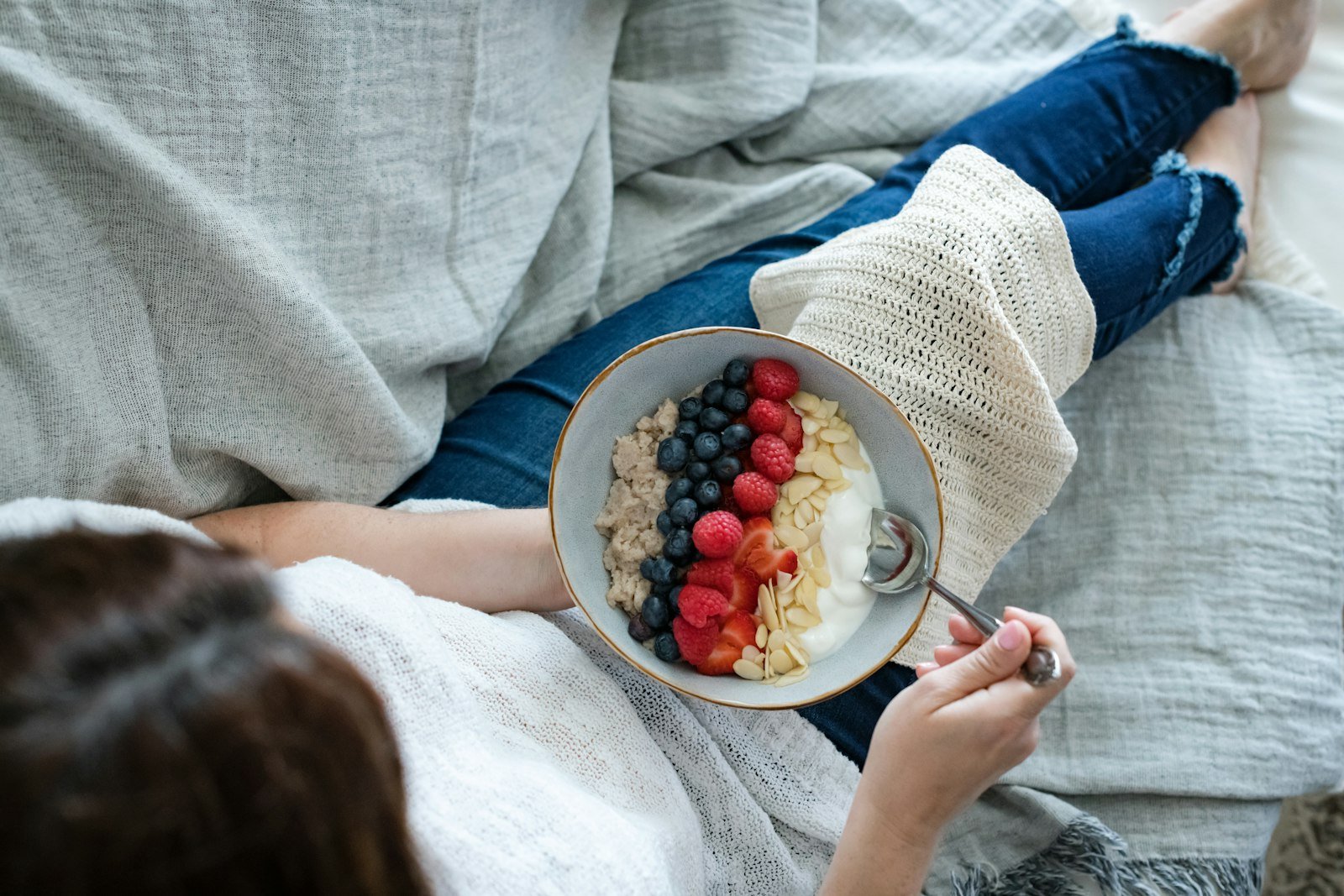
Weight loss appetite control often fails for a reason that has nothing to do with willpower: you may simply be short on sleep. In a two-week laboratory study of 11 healthy adults, snack calories rose from about 866 to 1,087 per day when volunteers slept 5.5 hours instead of 8.5. Most of that extra eating happened between 7 p.m. and 7 a.m.
Below, you will find what that study does and does not prove, how fiber and slower eating fit in, and five habits you can try this week.
This article is for general education and is not medical advice. Please read our Medical Disclaimer and talk to your own clinician about your health.
Short Sleep and Weight Loss Appetite Control
Researchers writing in the American Journal of Clinical Nutrition tracked 11 healthy volunteers, five women and six men, with an average age of 39. Each person spent two 14-day stays in a sleep lab, once with 5.5 hours in bed and once with 8.5 hours. Food was freely available the whole time.
Sleep dropped by roughly two hours a night in the short-sleep condition. Meal intake stayed similar. Snacking did not. Snack calories climbed by about 220 a day, and the snacks were slightly higher in carbohydrate.
Now the fine print. The study was small. Total daily energy intake was no longer statistically significant once the researchers adjusted for baseline weight. Leptin and ghrelin, two hormones often blamed for sleep-related hunger, did not differ significantly between the two conditions. So the honest takeaway is narrower than headlines suggest: short sleep pushed these volunteers toward more snacking, especially at night, and the hormones did not explain it.
Still, the practical message holds. The CDC says adults aged 18 to 60 need 7 or more hours of sleep, with 7 to 9 hours for ages 61 to 64 and 7 to 8 hours for 65 and older. If hot flashes keep breaking up your nights, our guide to menopause sleep problems explains why and when to ask for help.
Hunger Versus Cravings
Real hunger builds slowly, and almost any food will satisfy it. A craving arrives suddenly and points at one food, often something sweet. Telling them apart helps you respond to each in a different way.
Hunger needs a meal or a planned snack. A craving often needs a pause, a glass of water, or an earlier bedtime. If evening urges are your main struggle, our article on how to stop sugar cravings at night walks through that in detail.
Fiber: The Fullness Nutrient Most of Us Miss
Mayo Clinic says high-fiber foods tend to be more filling than low-fiber foods, so you are likely to eat less and stay satisfied longer. They also tend to carry fewer calories for the same volume.
Mayo Clinic, citing the National Academy of Medicine, lists a daily target of 21 grams for women older than 50 and 25 grams for women 50 or younger. Harvard’s Nutrition Source gives a wider range of 25 to 35 grams a day for adults and notes that most Americans eat only about 15 grams. That gap is large. Closing even part of it may help meals feel more satisfying.
Food-first options include oats, beans, lentils, berries, pears, chia, and vegetables with the skin on. Add them gradually and drink water as you go, since a sudden jump in fiber can cause gas and bloating. If digestive changes are already a problem, see our piece on fiber deficiency for more background.
Protein and Legumes at Meals
Harvard’s Nutrition Source says eating around one daily serving of beans, chickpeas, lentils or peas can increase fullness, which may lead to better weight management and weight loss. The same page notes that the recommended minimum protein intake is 0.8 grams per kilogram of body weight, just over 7 grams for every 20 pounds.
That is a minimum, not a target. If you want help working out your own number, read our guide to protein for women over 40. For snack ideas that do not hide extra sugar, see high protein snacks for weight loss.
Slow Down: Eating Speed and Fullness
The Tufts Health and Nutrition Letter describes a small trial of 21 young, healthy adults with normal weight. They ate a 600-calorie meal in either 6 or 24 minutes. The slower eaters reported more fullness and had lower ghrelin levels. About three hours later, they ate 25 percent fewer calories when offered a snack.
Keep the limits in mind: the participants were young and lean, and the letter does not name the study. Even so, putting your fork down between bites costs nothing and gives your body time to register the meal.
5 Habits to Try This Week
- Set a lights-out time. Aim for at least 7 hours in bed, and treat it like an appointment.
- Start with fiber. Add oats and berries, or beans on toast, to breakfast, and build up slowly.
- Add a legume daily. A serving of lentils, chickpeas or beans at lunch or dinner is an easy start.
- Stretch the meal. Aim for about 20 minutes, and put the fork down between bites.
- Ask before you snack. Check whether you are hungry, thirsty, tired or bored. For a warm, unsweetened alternative, see tea for appetite control.
When to Talk to a Doctor
Everyone feels hungry at times. Still, talk to your doctor or a registered dietitian if you notice any of these:
- Constant hunger or thirst that is new for you.
- Unexplained weight changes.
- Eating that feels out of control or leaves you distressed.
- Poor sleep that lasts for weeks despite good habits.
A professional can look for underlying causes and tailor advice to your history. Please do not start appetite-suppressing supplements or medications without medical guidance.
FAQ: Weight Loss Appetite Control
How can I control my appetite without pills?
Start with habits. Sleep at least 7 hours, eat fiber-rich foods such as oats, beans and berries, include a legume serving daily, and slow your meals to about 20 minutes. These steps work with your body’s fullness signals instead of fighting them.
Does lack of sleep make you hungrier?
In one lab study, volunteers who slept 5.5 hours instead of 8.5 ate about 220 more snack calories per day, mostly in the evening and overnight. The study was small, and hormone levels did not explain the change, but protecting sleep is a low-risk step.
How much fiber do women need each day?
Mayo Clinic, citing the National Academy of Medicine, lists 21 grams for women over 50 and 25 grams for women 50 or younger. Harvard’s Nutrition Source cites 25 to 35 grams for adults and says most Americans average about 15. Increase gradually and drink water.
Your Next Step
Pick one habit from the list and keep it for seven days. Small, repeatable changes beat a strict plan you drop by Friday. If you would like gentle, practical support, you can Join the GoodLaif Community and get our set of 50 diet motivation graphics as a thank-you.
Sources
- Sleep curtailment is accompanied by increased intake of calories from snacks (Nedeltcheva et al., American Journal of Clinical Nutrition, 2009)
- About Sleep (CDC)
- Dietary fiber: Essential for a healthy diet (Mayo Clinic)
- Fiber (Harvard T.H. Chan School of Public Health, The Nutrition Source)
- Protein (Harvard T.H. Chan School of Public Health, The Nutrition Source)
- Slow and Steady Wins the Waist (Tufts Health & Nutrition Letter)







+ There are no comments
Add yours