


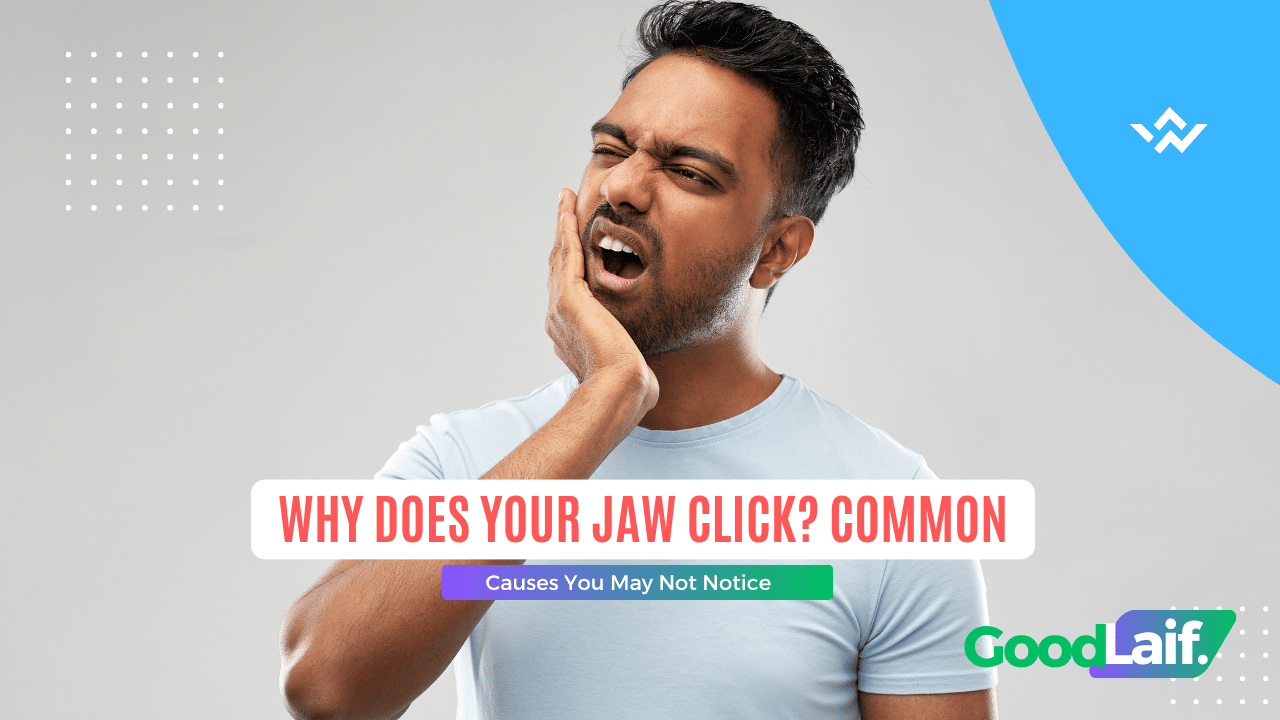
Have you ever opened your mouth wide and suddenly heard a “click” from your jaw? Don’t worry, why your jaw clicks doesn’t always mean something serious. It can happen occasionally when you chew, yawn, or open your mouth too wide.
But if it happens often and comes with pain, stiffness, or trouble opening your mouth, it’s worth getting checked. So, why does your jaw keep clicking? It could be linked to habits that make your jaw work harder than usual.
Why Does Your Jaw Click? These Simple Habits May Be the Cause
1. You Always Chew on One Side
Take a moment to notice: do you usually chew on the right or left side? If you always use the same side, the pressure on both sides of your jaw can become uneven.
Doing this once in a while probably isn’t a big deal. But if it becomes a daily habit, your jaw muscles can get tired more easily, and that “crack” sound may show up more often.
Try chewing on both sides instead, especially when eating foods that require a lot of chewing.
2. You Chew Gum Too Often
Chewing gum may seem harmless, but your jaw is still working the entire time. If you chew gum for an hour nonstop, the muscles around your jaw can start feeling sore.
This is especially worth noticing if you already hear a “click” from your jaw. Try cutting back on gum so your jaw gets a chance to rest.
3. You Clench or Grind Your Teeth
Some people clench their teeth without realizing it when they’re focused, stressed, or asleep. Others grind their teeth while sleeping. This habit is known as bruxism.
Doing this keeps your jaw muscles working for longer than they should. Over time, your jaw may feel tired when you wake up, and a clicking or cracking sound may happen more often when you open or close your mouth.
If you often wake up with a tired jaw or sensitive teeth, pay attention to whether you might be clenching your teeth without realizing it.
4. You Open Your Mouth Too Wide
Yawning, laughing, or biting into a large piece of food can make your jaw move farther than usual.
For example, you might bite straight into a large burger or an apple without cutting it first. Movements like this can put extra pressure on the jaw joint.
A “click” once in a while after opening your mouth wide doesn’t necessarily mean there’s a problem. But if your jaw clicks often, hurts, or feels like it shifts, don’t force it.
What If It Doesn’t Hurt?
So, what if your jaw makes a sound but doesn’t hurt?
If your jaw clicks without pain or stiffness, and you can still open and close your mouth normally, there’s usually no need to panic.
There’s a small part inside the jaw joint that moves when you open and close your mouth. That movement can sometimes create the sound you hear.
The important thing is to pay attention to whether any other signs show up.
Why Does Your Jaw Click? Here’s When to Get It Checked


A jaw sound needs more attention if it comes with pain, a locked jaw, difficulty opening your mouth, pain while chewing, or swelling around the jaw.
If your jaw suddenly gets stuck, don’t force it. Leave it alone and get it checked.
You should also see a dentist if the clicking starts affecting your daily activities, such as making it painful to eat, making it difficult to open your mouth, or happening almost every time you chew.
A dentist can examine your jaw and the surrounding muscles to figure out what may be causing the problem.
So, what can you do to keep your jaw from clicking so often?
Read Also : Asymmetrical Jaw: Causes, Effects, and How to Fix It
So, What Can You Do?
If the clicking only happens occasionally and doesn’t come with pain, start by reducing habits that make your jaw work too hard.
Cut back on chewing gum, don’t open your mouth too wide, and pay attention to whether you clench your teeth without realizing it. If your jaw feels sore, choose softer foods for a while and cut back on foods that are very hard or chewy.
So, why does your jaw click? It can come from everyday habits like chewing on one side, clenching your teeth, or opening your mouth too wide. But if the clicking comes with pain or difficulty moving your jaw, don’t ignore it.
Instead of guessing what’s going on, it’s better to ask a dentist so you know where the problem is and can feel more at ease.