


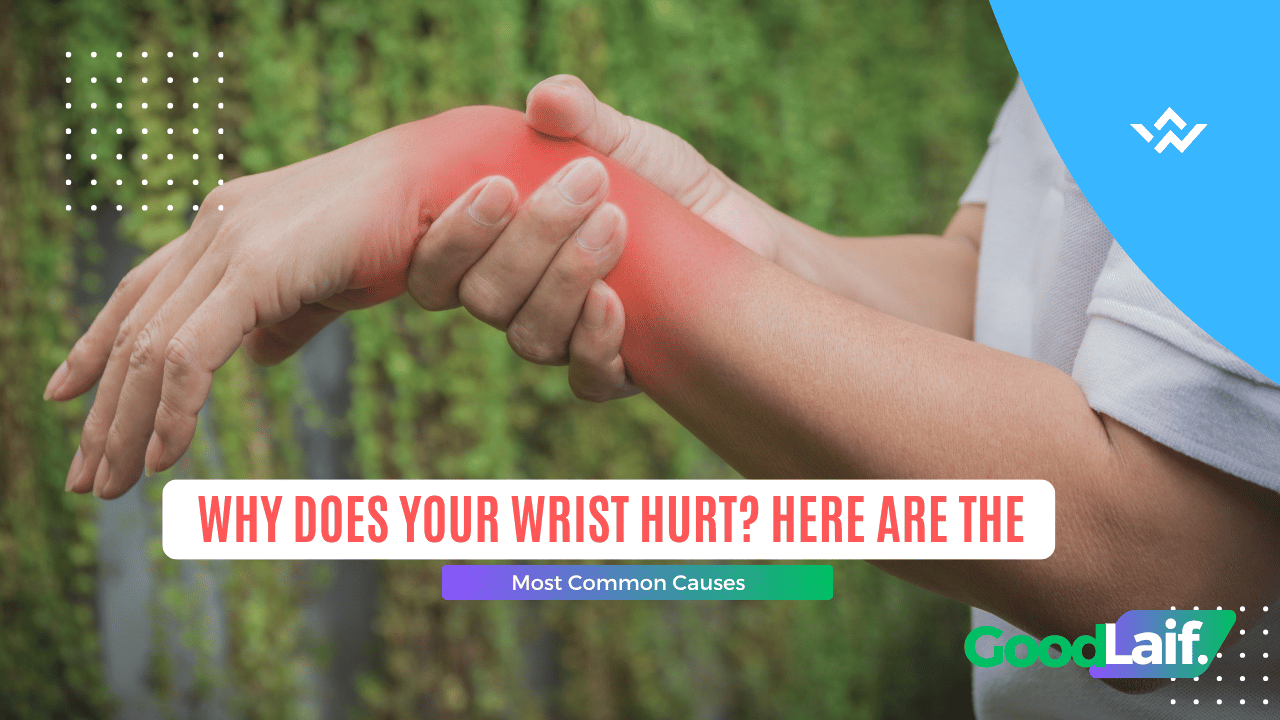
Why does my wrist hurt? It’s a question many people ask when they suddenly feel pain while typing, lifting heavy objects, opening a bottle, or even holding a glass. At first, it may only feel sore, but over time the discomfort can make everyday activities much harder.
It can be really frustrating when you’re rushing to finish work and your wrist suddenly starts aching. Instead of guessing what’s wrong, let’s look at the most common causes first.
Why Does Your Wrist Hurt? The Most Common Causes
Wrist pain doesn’t usually happen without a reason. Here are some of the most common causes.
1. Overusing Your Wrist
If you spend hours typing, gaming, or using a computer mouse every day, the muscles and tendons around your wrist can become overworked.
Repeating the same movements over and over may lead to soreness, pain, or stiffness.
Try giving your wrist a break for a few days. In many cases, the pain gradually gets better with enough rest.
2. A Sprain or Minor Injury
Have you ever fallen and used your hand to catch yourself? Or lifted something that was simply too heavy?
Even a minor injury can make your wrist ache, swell, and make it harder to grip everyday objects.
If the injury just happened, avoid heavy activities and apply a cold compress for 15–20 minutes. Wrap the ice pack in a towel instead of placing it directly on your skin.
3. Carpal Tunnel Syndrome
If your wrist pain comes with tingling or numbness in your thumb, index finger, and middle finger, carpal tunnel syndrome could be the cause.
This happens when a nerve in your wrist becomes compressed. A common sign is waking up with a tingling hand or feeling numb after scrolling on your phone for a long time.
If the tingling becomes more frequent or the pain doesn’t go away, it’s best to see a doctor so the exact cause can be confirmed.
4. Tendon Inflammation
Wrist pain can also be caused by irritated tendons.
When tendons are used continuously without enough rest, they can become inflamed and painful whenever you move your wrist.
If your wrist already hurts, don’t force yourself to keep using it. Give it some time to recover.
5. Arthritis
If your wrist feels painful almost every day and especially stiff in the morning, arthritis could be the reason.
If the pain keeps coming back or gets worse over time, it’s best to have it examined by a healthcare professional.
Now that you know the possible causes, let’s look at a few simple ways to reduce wrist pain at home.
How to Relieve Wrist Pain


If your symptoms are still mild, these tips may help.
- Rest your wrist. Your muscles and tendons need time to recover.
- Use a cold compress if there’s swelling. Wrap the ice pack in a towel to avoid irritating your skin.
- Do gentle stretching exercises. They can help reduce stiffness and improve flexibility.
- Keep your wrist in a comfortable position while typing. Avoid bending it upward for long periods.
- Take breaks from holding your phone or using a mouse. Even a few minutes of rest can make a difference.
These simple habits may seem small, but they often help reduce wrist pain over time.
When Should You See a Doctor?
Although many cases improve on their own, don’t ignore these warning signs.
- The pain doesn’t improve after several days.
- Your wrist becomes swollen or looks deformed.
- You experience ongoing numbness or tingling.
- It’s difficult to grip or lift objects.
- The pain started after a hard fall or serious impact.
Read Also : Finger Pain? Learn the Causes and How to Relieve It Safely
The Bottom Line
If you’re wondering, “Why does my wrist hurt?”, the answer depends on the underlying cause. So don’t try to guess it on your own. It could be muscle overuse, a minor injury, tendon inflammation, carpal tunnel syndrome, or arthritis.
There’s no need to panic, but don’t ignore it either. If the pain becomes more frequent or starts interfering with your daily routine, see a doctor to find out the exact cause.
Comment “RECOVER” if you’re currently dealing with wrist pain. 👇
Hope your wrist feels better soon so you can get back to typing, working, and doing your daily activities comfortably.
Quick note: This article is for general information only and isn’t a substitute for professional medical advice. If your wrist pain doesn’t improve or is accompanied by swelling, numbness, or difficulty moving your hand, consult a healthcare professional as soon as possible.