

Are your feet constantly itchy, especially between your toes? Don’t just brush it off. Itchy skin that starts peeling or cracking can be a sign of a fungal infection causing itchy feet. This usually happens when your feet sweat a lot, stay inside closed shoes for too long, or your socks aren’t changed often enough.
For example, you might spend all day at the office wearing dress shoes. Your feet sweat, your socks become damp, and then you wear the same shoes again the next day. Before you know it, your feet stay damp for hours and the itching starts.
Everyday Causes of an Itchy Feet Fungal Infection
1. Your Feet Sweat Easily
The soles of your feet can get sweaty pretty easily, especially when the weather is hot or after you’ve been active.
When sweat stays on your skin, your feet become more humid. The areas between your toes can be especially easy to miss when drying off after a shower.
After showering or exercising, make sure your feet are completely dry. Don’t put on socks while your skin is still wet.
2. Wearing Shoes and Socks for Too Long
This is where the problem can continue. If your shoes are still damp, don’t put them straight back on. If you can, rotate between different pairs of shoes so each pair has enough time to dry.
You should also change your socks every day, or sooner if they’re already soaked with sweat. This helps prevent your feet from staying damp for too long.
3. Sharing Towels, Shoes, or Sandals
Foot fungus can spread through items that are shared with someone who has it. Towels, socks, shoes, and sandals are personal items, so it’s better not to share them.
Be careful when walking barefoot in places that are often wet, such as public bathrooms, locker rooms, or around swimming pools.
Changes You May Notice on Your Skin
Itching is usually one of the most noticeable signs. But pay attention to other changes too. Your skin may become red, scaly, dry, flaky, or cracked.
The skin between your toes may also feel sore, especially if it has started cracking. The itching can become more annoying after your feet sweat or when you take off your shoes and socks.
It can be really itchy, but scratching it repeatedly can cause cuts and irritation. Once the skin is damaged, it can become even more uncomfortable.
How to Treat an Itchy Feet Fungal Infection
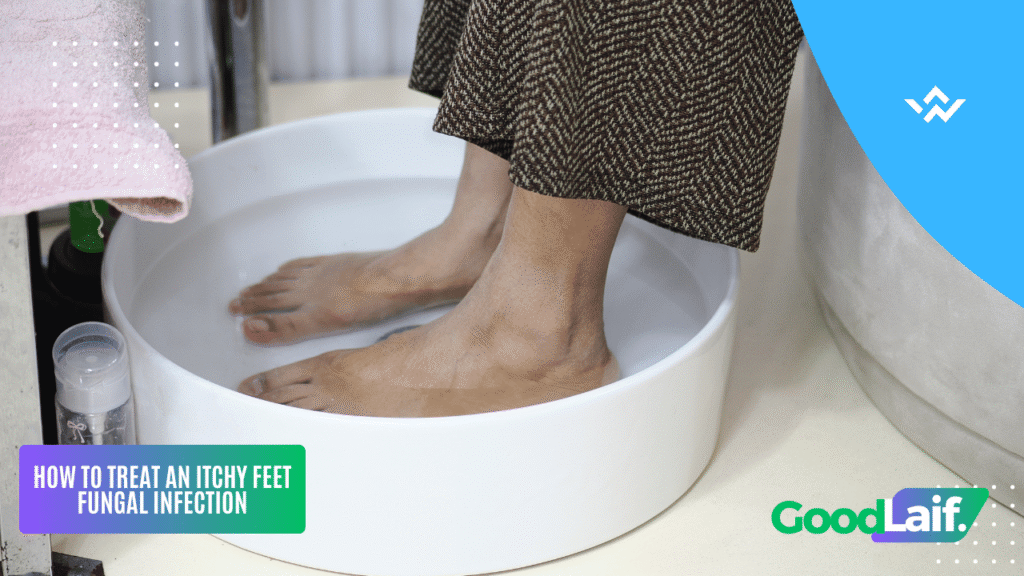
Start with simple steps. Wash your feet regularly and dry them thoroughly, especially between your toes. Change your socks every day and give your shoes enough time to dry before wearing them again.
If the symptoms seem to point to a fungal infection, an over-the-counter antifungal medicine may help when used according to the product directions. But if you’re not sure what’s causing the problem, don’t immediately try different creams because other skin conditions can look similar.
Don’t just apply steroid creams or regular anti-itch creams without knowing the cause. If fungus is the problem, using steroids without medical guidance can make the condition harder to treat.
If the itching is mild and has only recently started, you can begin by keeping your feet clean and dry while watching how the skin changes.
When Should You See a Doctor?
Mild itching may improve after keeping your feet clean and dry. However, some signs shouldn’t be left alone.
See a doctor promptly if you develop pus-filled sores, fever, significant pain, or itching that spreads to your toenails. You should also seek medical attention sooner if you have diabetes, since foot problems need extra attention in this situation.
If the itching continues despite basic care or keeps spreading, it’s a good idea to see a doctor to find out what’s actually causing it.
Read Also : Peeling Skin on Feet? Here Are the Causes and How to Treat It
So, Where Should You Start?
Itchy feet fungal infection are often linked to sweaty feet, closed shoes, and damp socks. Start with simple habits like keeping your feet dry, changing your socks regularly, and giving your shoes enough time to dry.
If the itching gets worse, you develop sores or pus, the problem reaches your toenails, or you have diabetes, don’t wait too long to see a doctor.








+ There are no comments
Add yours