
Do your eyes often feel dry, gritty, or tired after spending hours in front of a screen? If so, don’t ignore it. Dry eyes are a common problem that can interfere with work, studying, and daily activities. The good news is that most causes of dry eyes can be managed with a few simple lifestyle changes, so you don’t have to put up with discomfort every day.
According to the American Academy of Ophthalmology (AAO), dry eye occurs when your eyes do not produce enough tears or when the tear film is of poor quality, leaving the surface of the eye inadequately protected. This article is for informational purposes only and does not replace medical advice. If your symptoms persist, become severe, or affect your vision, consult an eye doctor as soon as possible.
Why Do Eyes Become Dry?
Tears do much more than keep your eyes wet. They contain layers of oil, water, and mucus that work together to keep the eyes lubricated, comfortable, and protected from irritation. When tear production decreases or the tear film becomes unstable, your eyes can feel dry, sore, gritty, or easily fatigued.
Common Causes of Dry Eyes
1. Spending Too Much Time Looking at Screens
When using a computer, smartphone, or watching TV, people naturally blink less often. As a result, tears evaporate more quickly, leaving the eyes dry. If you spend long hours in front of a screen, remember to give your eyes regular breaks. That’s where the 20-20-20 rule, explained below, can help.
2. Aging
As we get older, tear production naturally decreases, especially after the age of 50. While this is a normal part of aging, proper eye care can help reduce symptoms.
3. Dry Environments
Air conditioning, fans, cigarette smoke, and windy weather can all speed up tear evaporation. If you work in an air-conditioned office, consider using a small humidifier at your desk or close your eyes for about five seconds every hour to help maintain eye moisture.
4. Wearing Contact Lenses
Wearing contact lenses for extended periods may reduce the eye’s natural moisture. Follow the recommended wearing schedule and give your eyes regular breaks.
5. Certain Medical Conditions or Medications
Health conditions such as diabetes, thyroid disorders, and Sjögren’s syndrome can reduce tear production. Some medications, including antihistamines, antidepressants, and blood pressure medicines, may also contribute to dry eyes. Never stop taking prescribed medication without consulting your doctor.
How to Relieve Dry Eyes
The following tips may help reduce mild symptoms:
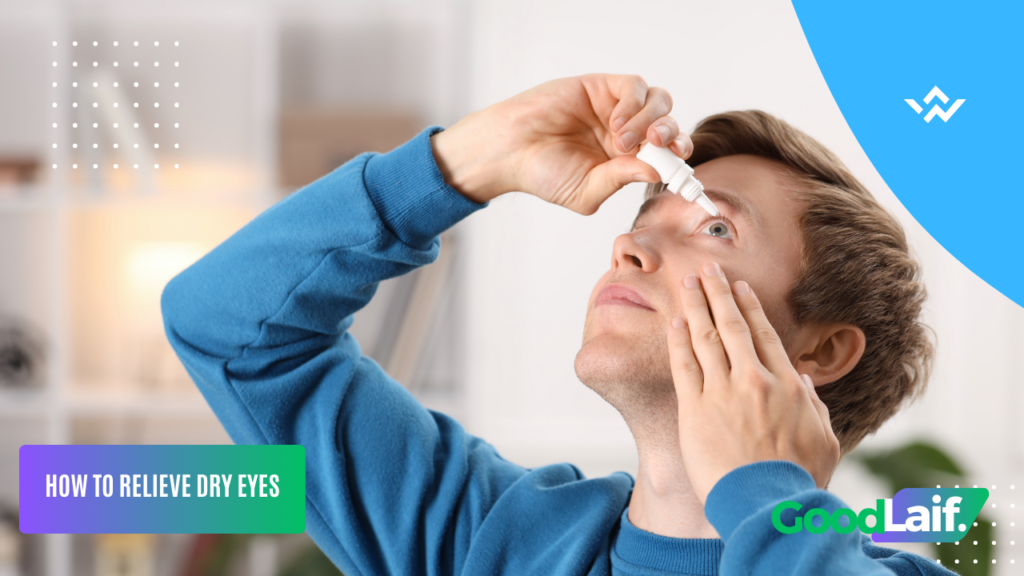
- Use artificial tears (lubricating eye drops) as directed to replace the missing tear film.
- Follow the 20-20-20 rule: Every 20 minutes, look at something about 20 feet away for 20 seconds to give your eyes a break.
- Blink more often when using a computer or smartphone.
- Reduce direct airflow from air conditioners to slow tear evaporation.
- Drink enough water because dehydration can reduce tear production.
- Wear protective glasses when outdoors on windy days.
These steps can help relieve symptoms but may not treat the underlying cause. If dry eyes continue to return, schedule an eye examination.
When Should You See a Doctor?
See an eye doctor if you experience:
- Dry eyes that do not improve with artificial tears.
- Severe eye pain.
- Red eyes with discharge.
- Blurred or reduced vision.
- Extreme sensitivity to light.
It’s better to have your eyes checked early than wait until your vision is affected. Early treatment can help prevent more serious problems.
Read Also : Sore Eyes: Causes, Ways to Relieve It, and When to See a Doctor
Conclusion
The causes of dry eyes range from prolonged screen time and aging to dry environments, contact lens use, and certain medical conditions. Fortunately, many cases can be managed with healthy habits and proper eye care.
Don’t ignore dry eyes. Identifying the cause early makes treatment more effective. Start with simple habits like following the 20-20-20 rule and staying well hydrated. Comfortable, healthy eyes can help you stay focused and productive throughout the day.





+ There are no comments
Add yours